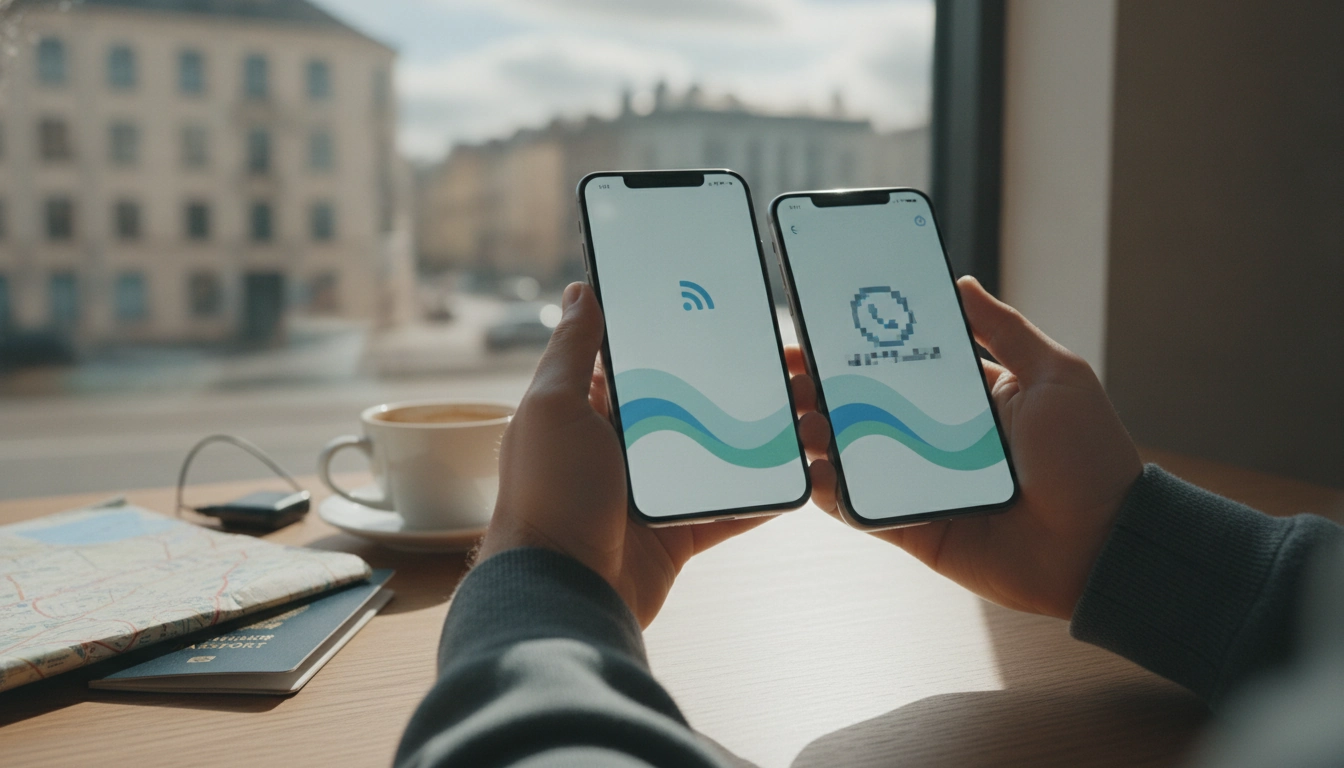
Sometimes, but not always. A travel eSIM is primarily designed to give your phone mobile data abroad, and many travel eSIM plans are data-only. In those cases, you won’t receive a new local phone number, and you’ll rely on internet-based calling and messaging apps (like WhatsApp, FaceTime, iMessage, or Google Voice) for communication.
Some eSIM packages are sold as voice + text + data plans, or they may include an assigned number (local or international). If you choose one of these, your phone can place standard cellular calls and send SMS using that eSIM line—similar to how a physical SIM works. Availability depends on the provider and the country or region covered by the plan.
If your phone supports Dual SIM (most newer iPhones and many Android models do), you can keep your primary SIM active for your regular number while using the travel eSIM for data. That means you can still receive calls and texts to your usual number, but your carrier may charge roaming fees for those services unless you disable roaming, use Wi‑Fi Calling, or forward calls before you leave.
Check the plan details for words like “data-only,” “SMS,” “voice,” or “number included.” If it’s data-only, expect no new phone number and plan to use app-based calling. If you’re comparing options for short trips—SIM vs eSIM vs roaming—this guide breaks down what to look for: SIM vs eSIM vs roaming: a smart setup for short trips.
For Travel eSIM Phone Numbers: Data-Only vs Voice Plans, the best answer depends on fit, material, care instructions, and how the product will be used day to day.
Yes. WhatsApp works over mobile data, and your account stays tied to your existing number even if the travel eSIM doesn’t provide a new one.






Leave a comment