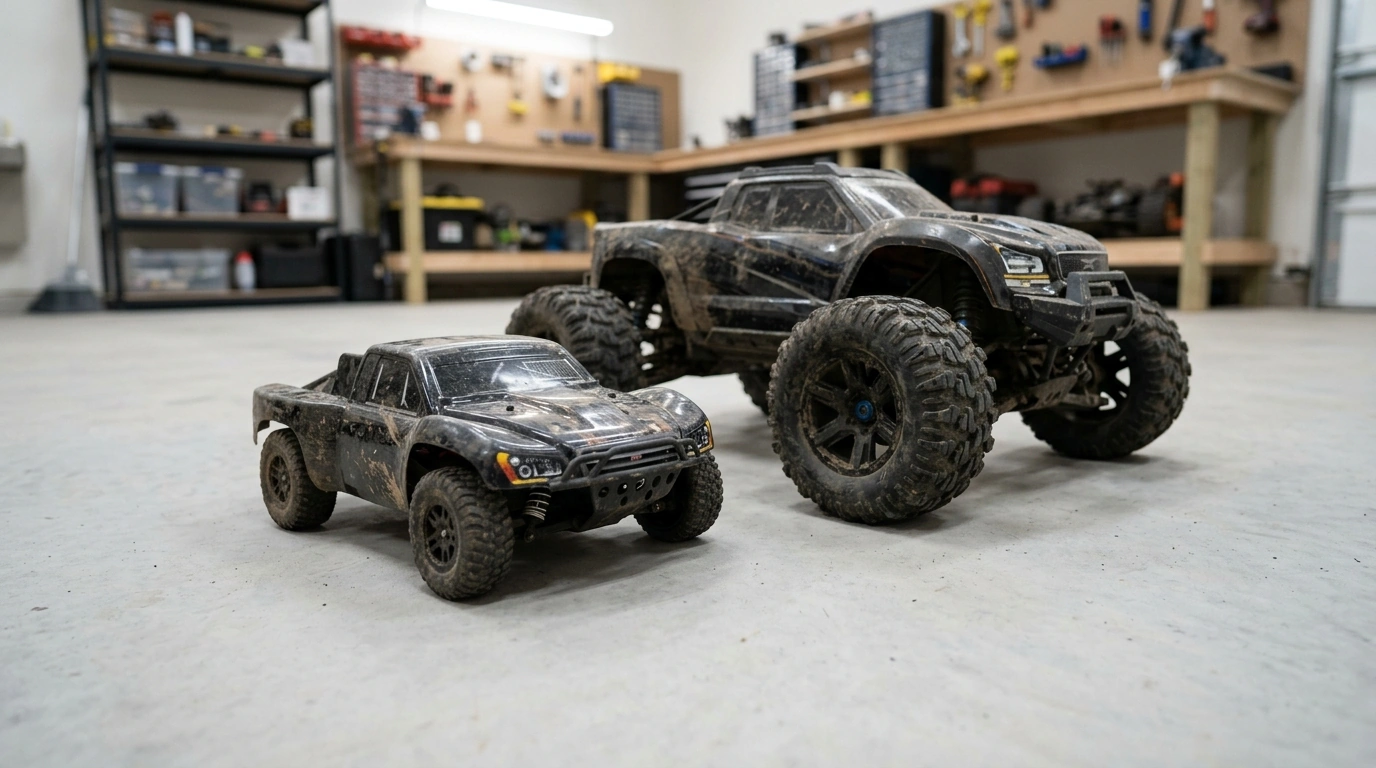
A 1/10 scale RC is bigger than a 1/16 scale RC. Scale works like a fraction: the smaller the denominator, the larger the model. So a 1/10 vehicle represents a larger “slice” of the real vehicle than a 1/16 does, which translates to more overall length, width, height, and usually more ground clearance.
In simple terms, 1/10 is about 60% larger in linear dimensions than 1/16 (because 16 ÷ 10 = 1.6). That difference becomes even more noticeable in presence and capability: tires are taller, stance is wider, and the chassis typically has more room for electronics. Weight also tends to increase, which affects how the vehicle tracks over rough terrain.
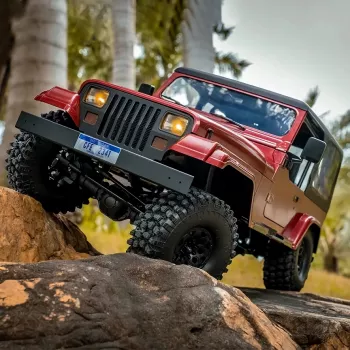
If you’re aiming for trail driving, a 1/10 scale rig usually handles roots, gravel, and uneven dirt more confidently thanks to larger tires and higher breakover angles. Our team’s trail-focused guidance goes deeper on setup and driving technique in our main guide: 1/10 Off-Road Explorer RC Car Trail Driving Guide.
A 1/16 scale RC shines when you need a smaller footprint: tighter backyard spaces, indoor courses, or packing light for travel. They’re also often easier to store and can be less intimidating for newer drivers in confined areas.
Choose 1/10 if you want steadier trail manners, more upgrade room (battery, servo, lighting, accessories), and better rollover resistance on rough ground. Choose 1/16 if you want a more compact RC for smaller spaces, quick grab-and-go sessions, and simpler transport. Either way, match your scale to where you’ll drive most—space and surface matter as much as the vehicle itself.
Yes, 1/16 scale can be very beginner-friendly, especially if you’ll drive in smaller areas where lower mass and a tighter turning footprint help. Just make sure you have enough ground clearance for the surfaces you plan to run.




Leave a comment