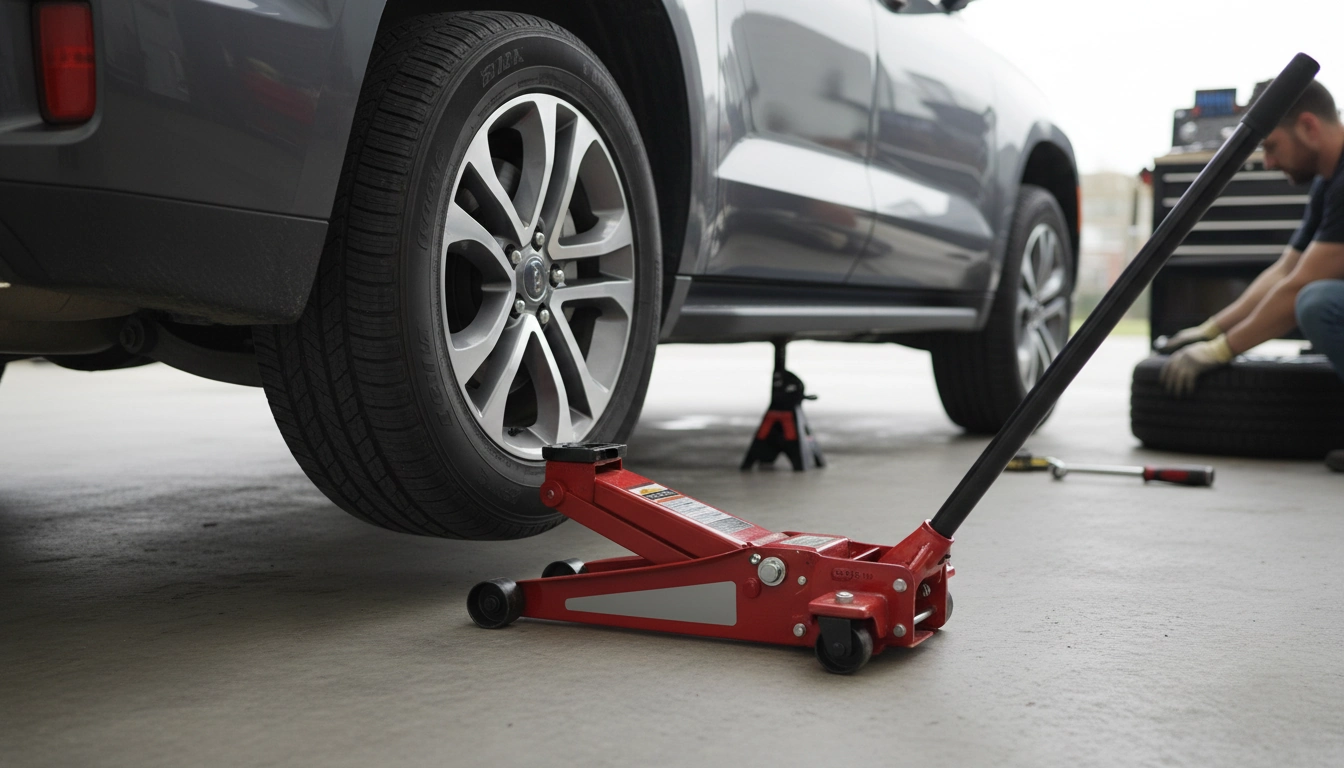
For most SUVs, a hydraulic floor jack with a 3-ton capacity is the safest, most practical choice. SUVs sit higher than sedans and often weigh more, so a jack needs both enough lifting range to reach the frame or approved jack point and enough capacity to handle the load without working at its limit.
A low-profile, long-reach 3-ton floor jack is ideal for many crossovers and body-on-frame SUVs because it combines stability, faster lifting, and controlled lowering. Look for a wide wheelbase, a sturdy saddle, and a lift height that comfortably clears your SUV’s ground clearance and suspension droop.
A 4-ton (or higher) bottle jack can work well for SUVs, especially those with ample clearance, but it’s typically less stable than a floor jack and requires a solid, level surface. It’s compact for storage, but lifting can be slower and fine positioning can be harder.
Many SUVs ship with a scissor jack for roadside tire changes, but it’s not ideal for routine work. It usually has limited lift range and stability, and it’s best reserved for short, emergency lifts on firm ground.
Choose a jack rated above your vehicle’s needs (3 tons is a common baseline), with enough maximum lift height to raise the tire fully off the ground. A rubber-padded saddle helps protect pinch welds and frame points. Most importantly, use jack stands for any work under the vehicle—never rely on the jack alone.
For a deeper breakdown of jack types, capacities, and SUV-friendly features, visit https://elpisa.com/what-jack-is-recommended-for-suvs/.
Yes. Jack stands are essential for safety whenever any part of your body could be under the vehicle; the jack is for lifting, while stands are for holding the load securely.




Leave a comment