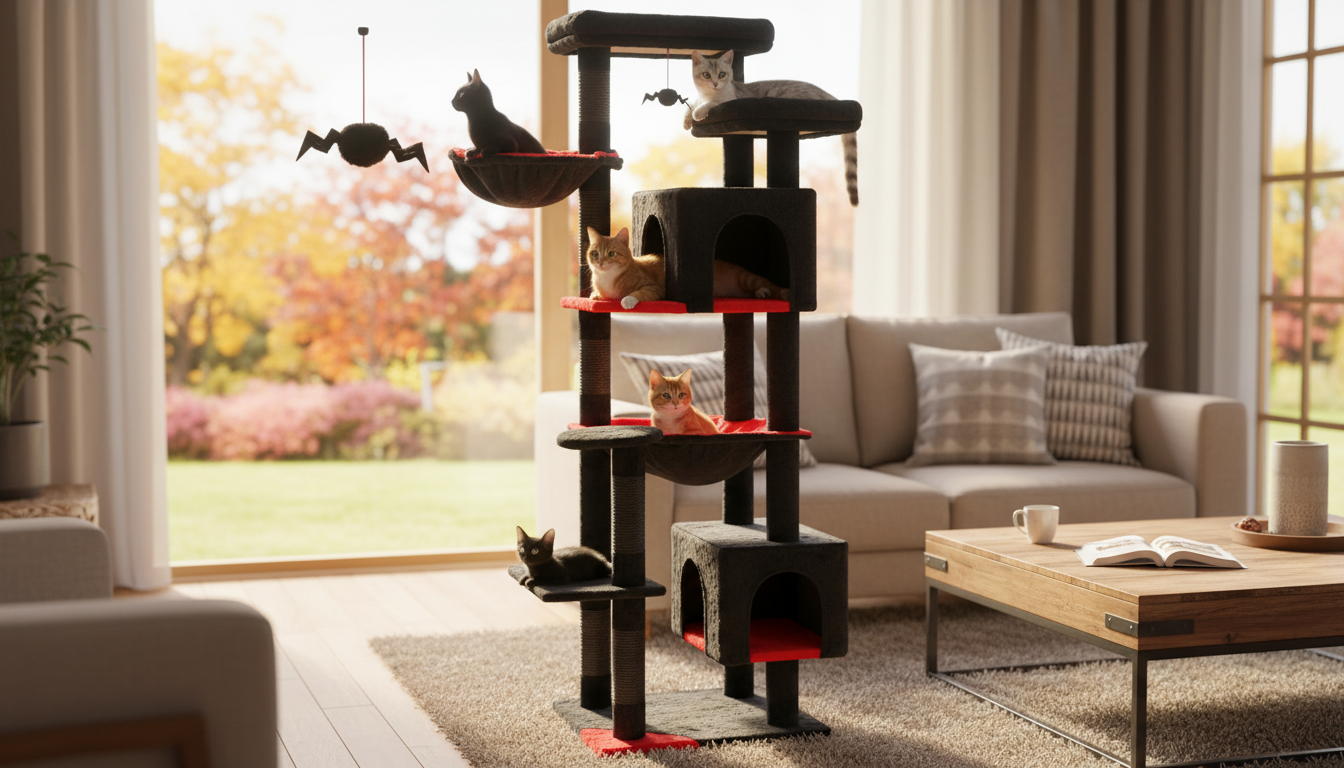
A tall multi-level cat tower can transform a small indoor space into a climb, scratch, lounge, and nap zone—especially when it includes a hammock and an enclosed condo for downtime. This guide breaks down what matters most for stability, comfort, and placement, and what to look for when choosing a tower for larger cats or multi-cat homes.
Indoor cats thrive when their home layout supports the behaviors they’re built for—climbing, surveying, scratching, and resting in elevated “safe” spots. Adding vertical territory is one of the most efficient ways to enrich an apartment or smaller room without sacrificing floor space.
Animal welfare organizations consistently recommend environmental enrichment (including climbing structures and resting spots) for indoor cats. For more guidance, see ASPCA’s overview of environmental enrichment and International Cat Care’s enrichment advice.
Not every tall cat tree is equally usable. A “looks impressive” tower can still go ignored if it’s hard to climb, wobbly under jumping, or missing the kinds of resting spaces cats prefer at different times of day.
A good multi-level layout also helps cats “flow” through the tower: a lower step for entry, a middle platform for pausing, and a top perch for a final lookout. When the path is intuitive, cats tend to use it more often and with less dramatic launching across the room.
Big cats can love tall towers, but sizing is the difference between “favorite hangout” and “too cramped to bother.” If a cat can’t stretch, turn, or sprawl comfortably, they’ll often choose the couch instead—even if the tower is otherwise well-made.
One easy test: picture your cat sleeping. If they routinely sleep “long,” with legs stretched and torso extended, choose platforms that look roomy—not narrow ledges. For multi-cat homes, extra surfaces matter because cats often self-sort: one may claim the top perch, while another prefers the mid-level hammock or the enclosed condo.
| Checkpoint | What to look for | Fix if needed |
|---|---|---|
| Base contact | All base corners sit flush with the floor | Move to a flatter spot or add a thin anti-slip mat |
| Initial wobble test | Gentle push shows minimal sway | Retighten bolts and ensure posts are fully seated |
| Level alignment | Platforms sit level, not tilted | Reassemble the affected section and tighten evenly |
| Hammock support | Fabric/fasteners feel secure and evenly tensioned | Retighten mounts; replace worn straps or attachment points |
| Scratch post rigidity | Posts don’t twist under firm scratching | Tighten connections; rotate/replace worn components if available |
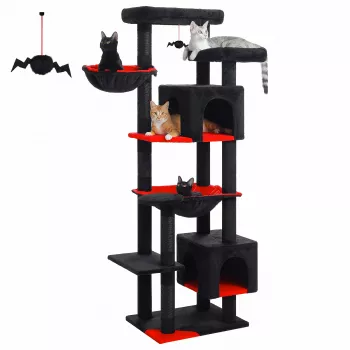
If you’re looking for a tall, all-in-one setup designed to add vertical territory without needing multiple separate pieces, consider the Tall Cat Tree for Large Indoor Cats – Multi-Level Cat Tower with Hammock & Condo. It’s built around the features many indoor cats use most: stacked levels for climbing, a hammock for relaxed lounging, and a condo for enclosed rest.
| What to verify | Why it matters | Good fit if… |
|---|---|---|
| Platform size | Larger cats need room to turn and stretch | Cats sprawl rather than perch tightly |
| Hammock support | Prevents sagging and improves comfort | Your cat prefers cradled lounging spots |
| Condo dimensions | Encourages use as a true retreat | Cats nap in covered beds or hideaways |
| Base stability | Reduces wobble and startle responses | Cats leap between levels or play-chase indoors |
Choose a height that fits your ceiling clearance and your cat’s mobility while still feeling stable. Taller trees add more vertical territory, but they should have well-spaced platforms and, if needed, an anchoring option for high-energy cats.
Many cats rotate between open perches for observing and enclosed spaces for deeper rest. Making the condo smell familiar with a small pad and encouraging hammock lounging with play nearby usually increases use.
Place it on a grippy anti-slip mat, tighten all hardware after assembly, and consider positioning it near a wall for extra confidence. If the model supports anchoring, anchoring can help in multi-cat homes or during high-speed play.




Leave a comment