Must-Know Pet First-Aid Cheat Sheet: Printable Emergency Guide for Pet Owners
Emergencies move fast—having a clear, printable pet first-aid guide can help stabilize a dog or cat until a veterinarian can take over. The goal is simple: reduce risk, prevent worsening, and buy time. Keep your plan focused on the most common urgent scenarios, what to do in the first minutes, and what supplies make a real difference.
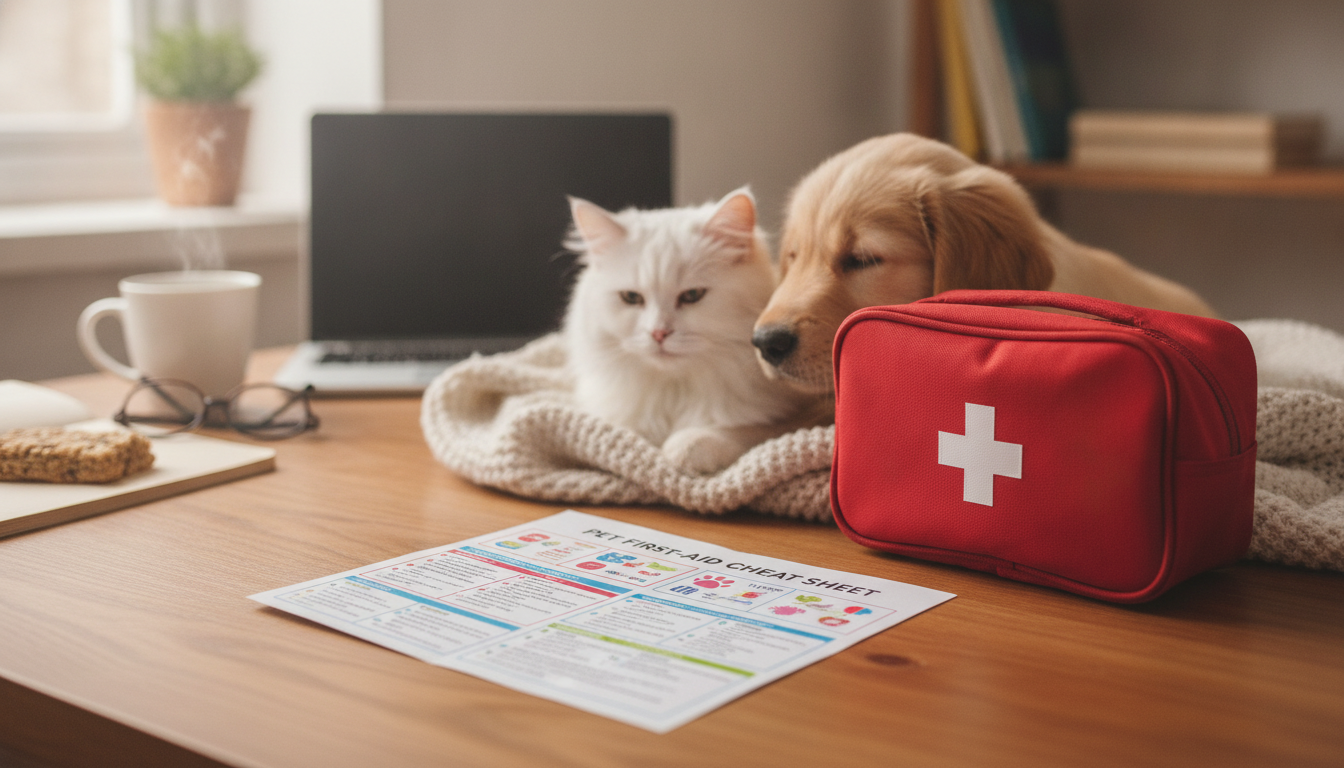
For a ready-to-print reference you can keep by your kit or on the fridge, consider the Must-Know Pet First-Aid Cheat Sheet (printable emergency guide).
When to act at home vs. head to the vet immediately
First aid is short-term support, not a substitute for veterinary care. If a situation looks serious, you’re not “overreacting” by calling—timing often changes outcomes.
- Go to emergency care now for: trouble breathing, uncontrolled bleeding, seizures lasting >5 minutes, collapse, severe pain, suspected poisoning, heatstroke, bloat signs, or inability to urinate.
- Call ahead when possible so the clinic can prepare and advise safe transport.
- If unsure, err on the side of calling a veterinarian or a poison hotline. The American Veterinary Medical Association (AVMA) first-aid tips are a solid baseline for what counts as urgent.
First minutes checklist: stay safe, stay organized
When adrenaline hits, simple steps prevent mistakes—especially with frightened pets who may bite even if they’re normally gentle.
- Secure the scene: remove hazards (electrical cords, toxins, broken glass) and keep other pets away.
- Use calm restraint: consider a towel wrap for cats or a leash for dogs; avoid putting your face close to the mouth.
- Check ABCs: Airway, Breathing, Circulation; note gum color and responsiveness.
- Document quickly: time symptoms started, possible toxin/trauma, medications given, and a short video of abnormal breathing or gait for the vet.
Quick triage guide (print-friendly)
| Sign |
What it can mean |
Do now |
Get help |
| Pale/white gums, weakness |
Shock, internal bleeding, severe blood loss |
Keep warm, minimize movement, control visible bleeding |
Emergency vet immediately |
| Blue/gray gums, open-mouth breathing (cat), gasping |
Oxygen crisis |
Keep airway clear, avoid stress, cool quiet transport |
Emergency vet immediately |
| Repeated vomiting, swollen abdomen (dog), unproductive retching |
Bloat (GDV) |
Do not give food/water; transport urgently |
Emergency vet immediately |
| Seizure |
Toxin, epilepsy, metabolic issue |
Clear area, time the seizure, keep hands away from mouth |
Vet now; emergency if >5 min or repeated |
| Limping/crying after injury |
Sprain, fracture, wound |
Limit movement; light bandage only if bleeding |
Vet same day if severe pain/non–weight bearing |
Control bleeding, clean wounds, and protect burns
Bleeding control and gentle wound care are among the most useful skills at home—because they’re time-sensitive and don’t require special equipment.
- Bleeding: apply firm direct pressure with clean gauze/cloth for 3–5 minutes before peeking; add layers instead of removing soaked material.
- If blood soaks through fast or spurts, maintain pressure and go immediately.
- Minor wounds: rinse with sterile saline or clean running water; avoid hydrogen peroxide unless specifically directed by a vet.
- Bandaging basics: non-stick pad on wound, gauze wrap, then cohesive wrap; check toes for swelling and keep bandage dry.
- Burns (heat/chemical): cool with running water for several minutes; do not apply ointments or ice; cover loosely and seek veterinary care.
Choking, CPR, and breathing emergencies
Breathing problems are always urgent. Move calmly and keep handling to a minimum to reduce stress.
- Choking signs: pawing at mouth, gagging, distress. If breathing is adequate, avoid blind finger sweeps that can push objects deeper.
- If an object is visible and easily grasped, remove carefully; stop if the pet struggles or you can’t see the item.
- CPR: for unresponsive pets with no normal breathing. Start compressions and rescue breaths only if trained or guided by a veterinarian/clinic on the phone.
- Transport positioning: keep the neck extended and airway unobstructed; keep the environment quiet and cool.
Poisoning: what to collect before calling for help
In suspected poisoning, the safest “first aid” is information plus fast professional guidance.
- Common hazards: human medications, xylitol, chocolate, grapes/raisins, rodenticides, lilies (cats), antifreeze, essential oils, household cleaners.
- Do not induce vomiting or give activated charcoal unless directed.
- Gather: product name/ingredients, amount possibly ingested, time of exposure, pet’s weight, current symptoms, and photos of packaging/labels.
- If dermal exposure: rinse coat/skin with lukewarm water and mild dish soap; prevent licking; seek guidance.
For reputable poison resources, see the ASPCA Animal Poison Control and Pet Poison Helpline.
Heatstroke, hypothermia, and dehydration
Build a pet first-aid kit that matches real-life emergencies
If you like having step-by-step checklists in multiple places (home, car, and travel bag), pairing your emergency printout with another planning-style printable like the Capsule Wardrobe Builder Kit can help keep a consistent “grab-and-go” system for busy households that rely on printed reminders.
Printable cheat sheet: where to keep it and how to use it under stress
FAQ
Should vomiting be induced if a pet eats something toxic?
No—inducing vomiting can be dangerous or make certain toxins cause more damage on the way back up. Call a veterinarian or poison hotline first because the right advice depends on the substance, timing, and your pet’s symptoms and health status.
What human medications are unsafe for dogs and cats in emergencies?
Common unsafe medications include ibuprofen, naproxen, acetaminophen, and many cold/flu products (often containing decongestants or combination ingredients). Only give medication when a veterinarian provides the exact drug and dose; some human-labeled drugs can be safe when specifically prescribed for your pet.
What belongs in a basic pet first-aid kit for home and travel?
Include bandaging supplies (non-stick pads, gauze, cohesive wrap, tape), saline for rinsing, gloves, blunt-tip scissors, tweezers, a digital thermometer, a towel/blanket or soft muzzle wrap, and an emergency contact card. Tailor it to allergies, chronic conditions, and outdoor risks (like ticks) for where your pet spends time.
Recommended for you






Leave a comment