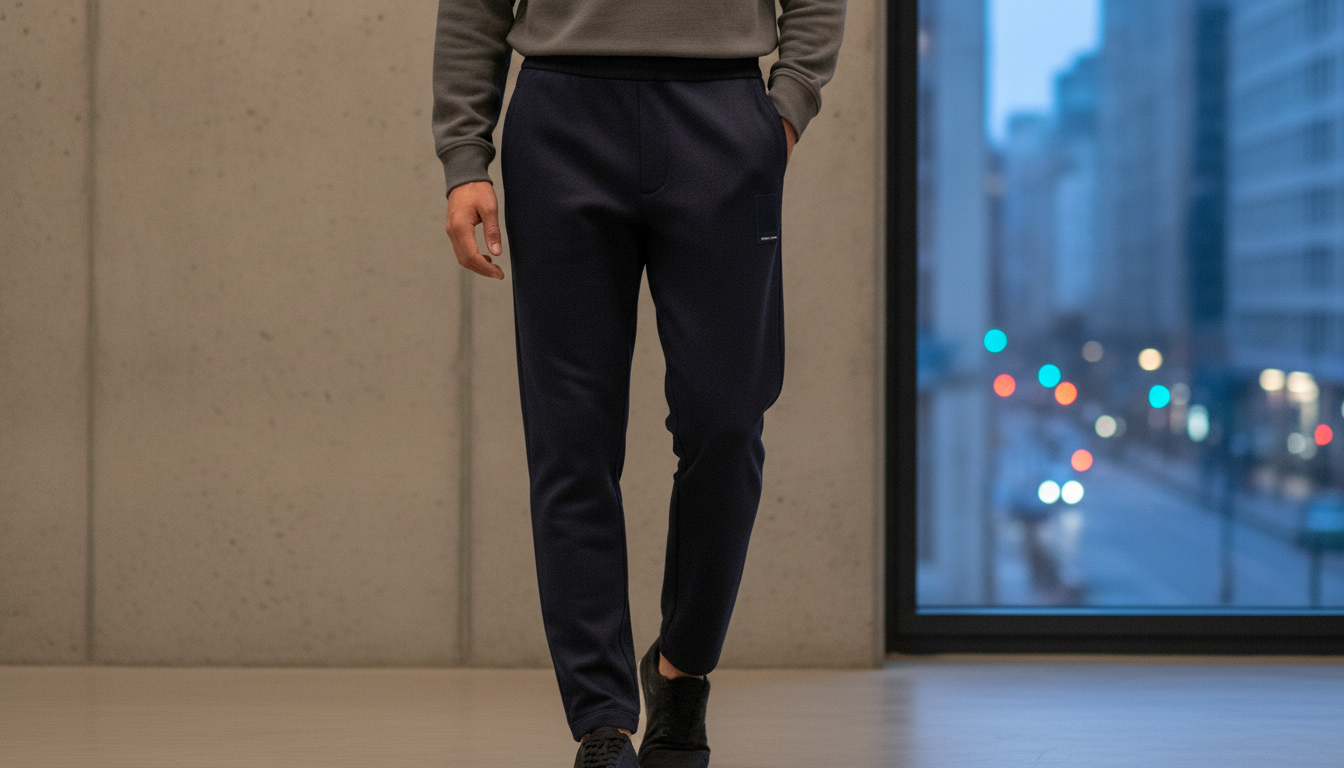
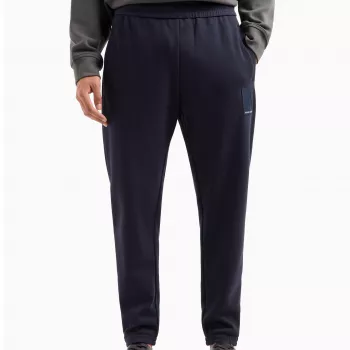
A polished pair of trousers can carry a wardrobe from weekday commutes to nights out. Armani Exchange men’s trousers in black-blue tones offer a versatile base that pairs easily with sneakers, loafers, and smart outerwear while keeping the look modern and streamlined. If you’re considering a pair like the Armani Exchange Men’s Black Blue Trousers, the details that matter most are the color’s flexibility, a flattering silhouette, and a fabric that stays comfortable from morning to late evening.
Black-blue is one of those rare “quiet upgrade” shades: it reads darker than navy, but it’s softer and more dimensional than true black. That in-between tone can make an outfit look intentional without feeling overdressed.
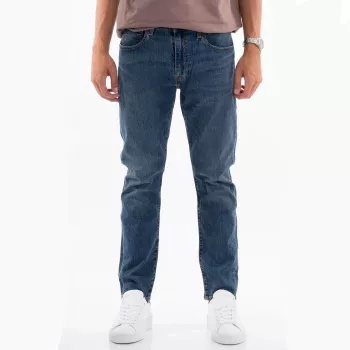
If you already own plain black trousers and want something that feels slightly fresher while staying versatile, black-blue is a smart move. For a more casual blue option with a worn-in vibe, compare them with Levi’s Men’s Blue Slip-On Jeans with Worn-Out Effect—a different silhouette and texture, but useful for weekends and travel.
Fit is what makes trousers look expensive (or not). The goal is a clean line from hip to ankle, without pulling at the thigh or seat. If you see horizontal strain lines across the front or the back pockets flare open, the size or cut is likely too small.
| Area | Good Sign | Adjustment if Off |
|---|---|---|
| Waist | Sits flat; two fingers fit comfortably | Size up or choose a different rise |
| Seat | No sagging; no strain lines | Try a different cut or size |
| Thigh | Comfort when sitting; fabric doesn’t pull | Choose a roomier fit or stretch fabric |
| Length | Falls cleanly to the shoe | Hem or choose a different inseam |
| Leg opening | Balanced with footwear | Taper/hem or select another silhouette |
For trousers that earn repeat wear, comfort has to hold up across real life: walking, commuting, sitting for hours, and moving through different temperatures. Midweight fabrics tend to drape better and keep their shape longer than flimsy weaves, especially in darker colors where wrinkles can show more clearly.
Care labels are worth a quick check before buying or washing. Standardized symbols can help decode the safest wash and dry method; the International Association for Textile Care Labeling (GINETEX) care label symbols are a reliable reference.
The best trousers don’t sit in the closet waiting for a special occasion—they rotate through multiple roles. Black-blue trousers are especially useful because they keep outfits grounded while letting jackets, shoes, or knitwear set the mood.
If you’re building a small rotation of outfits around a few core pieces, a structured planning tool can help you spot gaps and avoid duplicates. The Capsule Wardrobe Builder Kit | How to Build a Capsule Wardrobe 3-in-1 Guides can be a practical add-on for organizing looks around trousers like these.
If you publish reviews or testimonials about fit and durability, remember that marketing claims should reflect real experience and be presented transparently. The FTC Guides Concerning the Use of Endorsements and Testimonials in Advertising outline best practices for endorsements and reviews.
They can be, because black-blue often looks softer and more dimensional while still pairing with most colors. The shade may shift slightly depending on indoor versus daylight, which adds depth without being flashy.
With low-profile sneakers, a slim or tapered opening with little to no break usually looks cleanest. If fabric stacks at the ankle, hemming can sharpen the silhouette quickly.
Wash them inside out in cool water with a gentle detergent, and avoid high-heat drying. Air drying and washing only when needed can significantly slow fading over time.


Leave a comment