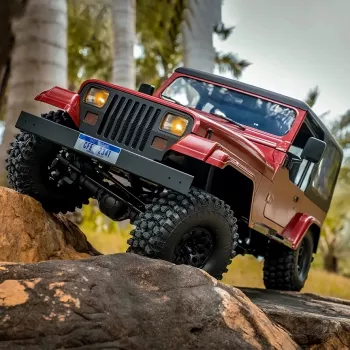
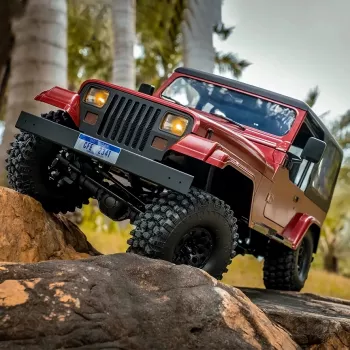
A 1:10 scale off-road RC car blends realistic proportions with the clearance and stability needed for uneven ground. This explorer-style model is built for outdoor running—think packed dirt, gravel paths, short grass, and light trail obstacles—while keeping controls approachable for newer drivers and still engaging for experienced hobbyists. The result is a vehicle that feels “substantial” on the ground, tracks more predictably through small ruts, and still fits into typical storage spaces without the bulk of many larger platforms.
Scale isn’t just about looks—on real terrain, it changes the way the car responds to bumps, rocks, and loose surfaces. A 1:10 model is generally large enough to feel stable over ruts and scattered gravel compared with smaller scales that can get deflected more easily by grass clumps or pebbles.
That larger footprint also tends to create more room inside the chassis for practical tasks like battery swaps, body removal, and wheel changes. For many drivers, that “working space” is a big part of why 1:10 is such a comfortable category to own and maintain.
At the same time, storage and transport remain manageable: it’s substantial, but typically not as bulky as many 1:8 vehicles. In day-to-day driving, scale size influences tire diameter, ground clearance, and how much throttle you need to stay controlled on loose dirt or gravel.
Before ordering, use the product page to confirm the exact drivetrain, battery type, expected runtime range, charger details, and replacement-part availability. Those details matter more off-road, where traction and durability get tested every session.
For trail and backyard use, prioritize suspension travel, sealed electronics (if offered), and tires with tread that matches your local surfaces. If the model supports interchangeable wheels/tires, it becomes much easier to tune the car for sand vs. gravel vs. hardpack.
| Feature | What to check | Why it matters |
|---|---|---|
| Scale & dimensions | 1:10 size, wheelbase, track width | Stability on uneven terrain and fit in storage/transport |
| Drivetrain | 2WD or 4WD/AWD (confirm on listing) | Traction and climbing ability on loose or rocky ground |
| Suspension | Shock type, travel, adjustability | Control over bumps and reduced chassis slap |
| Tires | Tread pattern and compound (confirm compatibility) | Grip on dirt/gravel and predictable braking |
| Battery & charging | Battery chemistry, capacity, charge time, connector type | Runtime, safety practices, and ease of spares |
| Parts support | Spare arms, hubs, gears, body mounts availability | Faster repairs after crashes and wear |
On packed dirt and gravel, a stable chassis and compliant suspension help keep the tires planted, which improves steering response and braking control. Instead of “skipping” across chatter, the car settles and tracks straighter, especially when you roll on throttle gradually.
Short grass often asks more from the drivetrain than people expect. Even when the surface looks smooth, the blades create drag and can bog down a vehicle without enough torque, traction, or appropriate tires. That’s where drivetrain configuration becomes more noticeable than it might be on pavement.
Loose surfaces reward smooth inputs. Easing into power reduces wheelspin, keeps the rear from stepping out unexpectedly, and helps the car carry momentum through turns. For explorer-style trail running, consistent low-speed control can matter as much as top speed—particularly when picking lines around roots, turning around obstacles, or cresting small rises without flipping over backward.
Confirm the included battery type and charging method on the product page, then follow the manufacturer’s instructions for charge rates and storage recommendations. If you’re using lithium-based packs, long-term life improves when you avoid storing fully charged for extended periods and stick to proper storage practices (see Battery University’s guidance on prolonging lithium-based batteries).
Charge on a non-flammable surface and avoid leaving charging batteries unattended. General toy safety guidance—especially around supervision, safe handling, and age-appropriate operation—is also worth reviewing from the U.S. Consumer Product Safety Commission.
1:10 Scale Off-Road Explorer RC Car — $601.96 (USD), in stock. Best suited for outdoor running on dirt, gravel, and mixed backyard terrain; confirm drivetrain and included accessories on the listing page before purchase.
Retro Countertop Microwave Oven with Digital Display – 0.7 Cu. Ft., 700W — $150.47 (USD), in stock. A practical convenience item for a garage or hobby corner when you’re doing longer wrenching sessions between runs.
Yes—1:10 is often beginner-friendly because it’s easier to see at a distance and tends to feel more stable over bumps than smaller scales. Start on open dirt or short grass, drive smoothly, and prioritize models with solid durability and readily available parts.
Most off-road 1:10 models handle gravel and short grass well, with results depending on tire tread, ground clearance, and drivetrain type. Avoid tall, wet grass when possible because it can overload the drivetrain and increase heat.
Brush off dirt and remove debris from suspension and steering areas, then check wheel nuts and key screws for looseness. After wet runs, dry the car and monitor drivetrain sound and electronics temperature before the next session.





Leave a comment