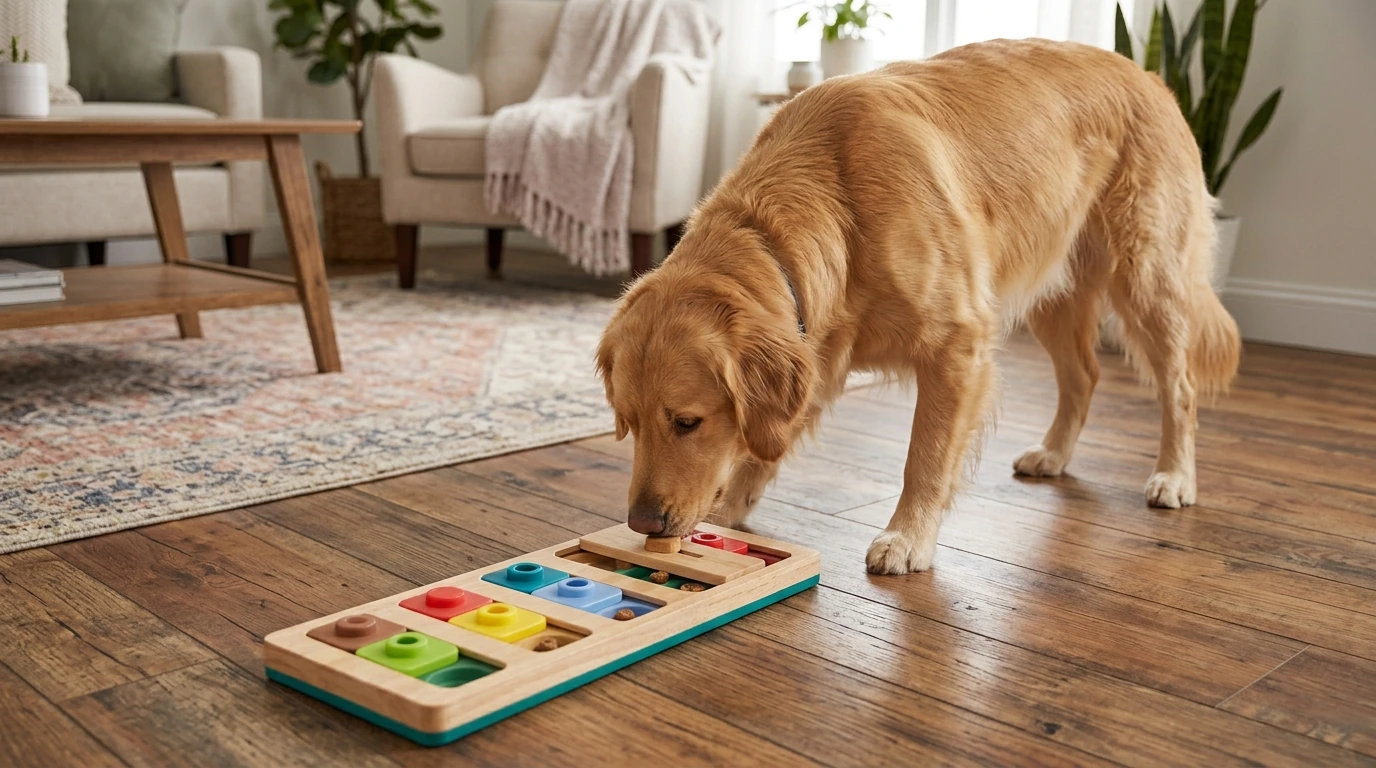
The best brain game for your dog is one that makes them think without making them give up. For many dogs, a treat-dispensing puzzle is a practical place to start: your dog uses their nose or paws to uncover small food rewards, turning a snack into a short enrichment activity.
Choose a puzzle that matches your dog’s current skill level, play style, and chewing habits. A beginner-friendly game should have an obvious way to find the reward, such as lifting a simple flap or nudging a sliding piece. More experienced dogs may enjoy puzzles with several steps, but complexity isn’t automatically better. The goal is steady engagement, not frustration.
Consider the material and construction, too. For a dog who chews, avoid games with pieces they could bite off or swallow. Use the puzzle under supervision, especially the first few times, and take it away if it cracks, splinters, or becomes damaged. If your dog tends to push toys around, a puzzle with a stable base may be easier to use than a lightweight one that skitters across the floor.
Start with a few treats placed where your dog can see or smell them, and let them explore without rushing. If the game has covers or moving parts, leave some open at first. Once your dog understands the idea, make the challenge slightly harder by closing one section or hiding rewards more thoroughly. If they paw frantically, bark, or walk away, simplify the setup and try again later.
Use part of your dog’s regular food allowance when it suits the puzzle, and choose rewards that fit their diet. Keep sessions short, particularly at first, and put the game away afterward. A puzzle can provide useful mental enrichment, but it should complement walks, play, training, and time with you rather than replace them.
Not every dog enjoys manipulating a toy. You can offer a supervised scent game by hiding a few treats in easy-to-find spots around one room, or practice simple cues such as “touch” and “find it.” These options let you adjust the difficulty in the moment and can be a better starting point for dogs who are cautious around unfamiliar objects.
For more easy puzzle ideas and ways to build calm focus, visit our guide to dog brain games.
You can offer a puzzle as part of your dog’s regular enrichment routine, adjusting the frequency and session length to their interest and energy. Keep sessions manageable and supervise your dog while they use it.




Leave a comment