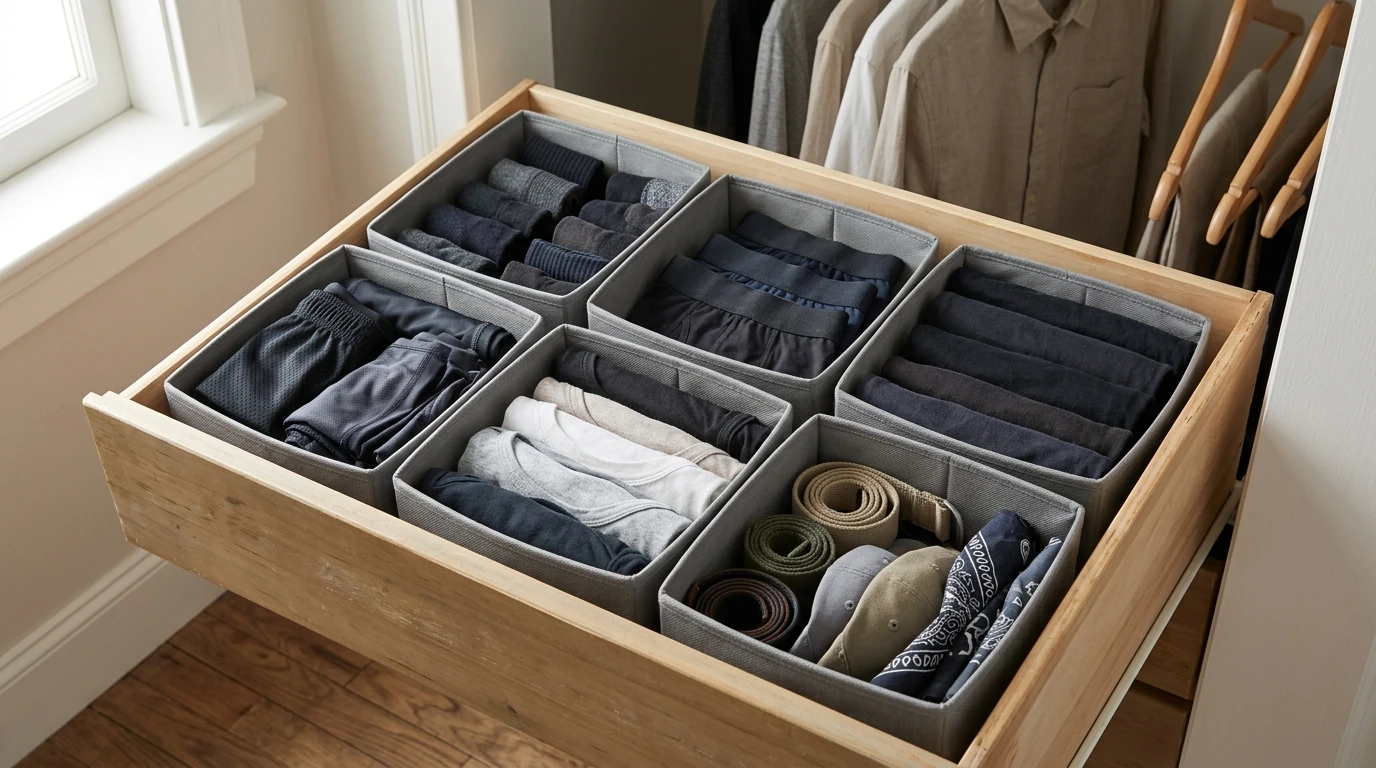
A tidy closet isn’t about having more space—it’s about giving every category a “home” that doesn’t shift around. Our team designed our 6PCS Fabric Organizer Bins – Closet Storage Drawer Dividers to create simple, repeatable order in drawers, shelves, and closet cubbies so socks stop migrating, tees stop slumping into a pile, and getting dressed stops feeling like a scavenger hunt. For more guidance, see 3PC Multi-Purpose, Wardrobe Clothes Organizer, Jeans ….
Most drawers don’t get messy because you “lack discipline.” They get messy because everything is sharing one open space with no boundaries. A few common patterns show up in almost every closet: For further reading, see 2026 Act Fast Shelf Dividers | storagedao.
Bins aren’t just dividers; they’re “containers for habits.” Once each category has a dedicated spot, your drawer becomes easier to maintain than to mess up.
If you want the set to feel like a real system (not just six random boxes), start with categories—not dimensions.
| Drawer/Space | Best categories to separate | Simple setup tip |
|---|---|---|
| Dresser top drawer | Socks, underwear, bras, sleepwear | Place bins edge-to-edge so nothing slides into gaps |
| T-shirt drawer | Tees, tanks, long sleeves, lounge tops | Use one bin as a “current favorites” rotation |
| Baby/kids drawer | Bodysuits, leggings, bibs, tiny socks | Keep sizes separated to avoid morning mix-ups |
| Closet shelf/cubby | Scarves, beanies, belts, clutches | Label the front edge for quick resets |
| Linen/utility drawer | Microfiber cloths, cleaning tools, small refills | Dedicate one bin to “backups” so you can see inventory |
Shelves and cubbies tend to look “busy” because you can see everything at once. Fabric bins help reduce visual noise while keeping categories accessible, but the real win is how you group items.
If you’re also streamlining what stays in your closet, pair your bin system with our Capsule Wardrobe Builder Kit | How to Build a Capsule Wardrobe 3-in-1 Guides so you’re organizing fewer, better-loved categories—not just shuffling clutter into prettier containers.
The easiest systems are the ones you can maintain quickly. This reset takes less time than re-folding one chaotic drawer.
Keeping drawer interiors clean also makes fabric organizers look crisper longer. For practical, safety-minded guidance on everyday cleaning, the CDC’s overview is a reliable baseline: CDC – Clean and Disinfect: Everyday Cleaning.
Once you use bins in a drawer, you start seeing other “everything piles” that would benefit from quick boundaries.
When you’re ready to set up a system you can actually keep up with, start with our 6PCS Fabric Organizer Bins – Closet Storage Drawer Dividers, then build your closet plan around the categories you use most.
Use bins for small items, accessories, and anything that tangles or mixes easily (socks, underwear, bras, belts, hosiery). Fold directly into the drawer when items are uniform and your drawer already has clear boundaries, but “file folding” inside bins typically gives the best visibility and fastest resets.
Yes—dividers prevent stacks from sliding into each other and protect category boundaries, which reduces the need to re-fold. For example, keeping socks and underwear in separate bins stops rummaging from collapsing everything around them, and the system holds up better after laundry.
A practical rule is 2–4 bins per drawer depending on drawer width and how many categories you want separated. Start with two high-traffic categories, then expand as needed—aim for a snug layout that still lets you lift bins out easily.



Leave a comment