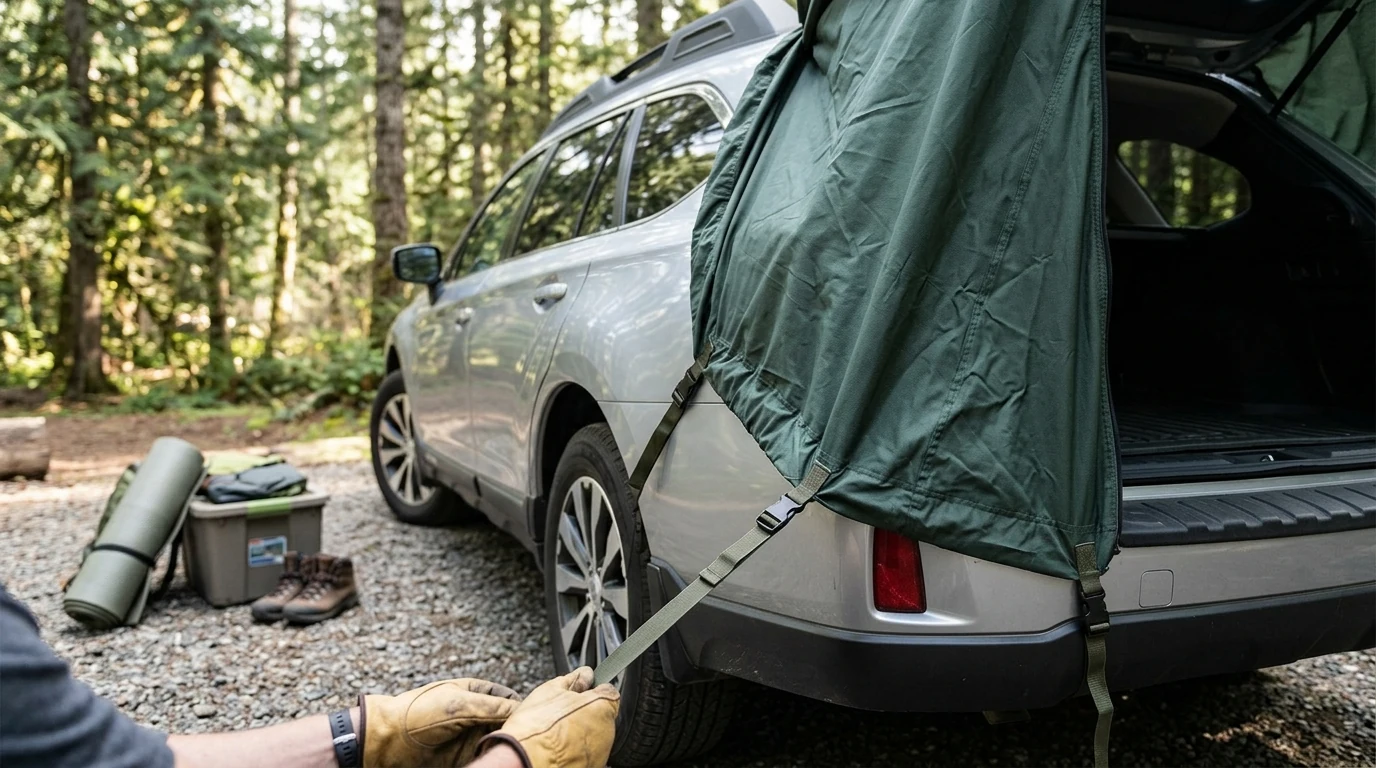
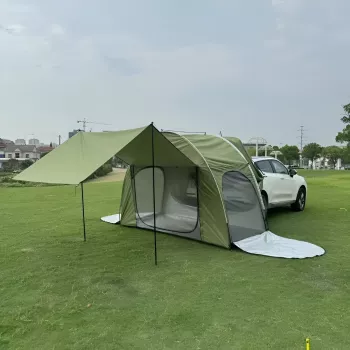
For most SUV campers, the best choice is a vehicle-attached SUV tent with a roomy sleeping area, a covered connection to the cargo opening, and the option to stand on its own. It gives you a sheltered route between your vehicle and tent, while letting you use the SUV for gear storage or travel between campsites.
An SUV tent is a good fit if you want to expand your usable space without sleeping on the roof. Look for an attachment sleeve or adjustable connection that suits your vehicle’s rear profile, plus a design that can detach so you can leave the tent standing while taking the SUV out.
If you prefer a simpler setup, a ground tent pitched beside the vehicle can work well. You won’t have a sealed connection to the hatch, but you can choose a tent independently of your SUV’s shape. A rooftop tent is another option when keeping the ground area clear matters, though it requires a compatible roof rack and a vehicle-rated load capacity.
Start with the number of campers and the space you need for bags or muddy gear. Compare the tent’s usable floor area and peak height, not just its advertised capacity. For changing weather, prioritize a full-coverage rainfly, sealed seams, sturdy poles, and ventilation panels that can remain open while protected from rain.
Also consider setup time, packed size, and how the attachment works around your hatch. The tent should connect without preventing the rear door from opening as intended, and the fabric should not rest against hot vehicle components. Practice pitching it at home so you can spot fit issues before a trip.
Never run the vehicle inside or while it is connected to an occupied tent; exhaust can expose you to carbon monoxide. Keep the exhaust outlet clear, use a separate carbon-monoxide alarm in enclosed sleeping areas, and follow the tent and vehicle manufacturers’ setup instructions. Stake and guy out the tent as directed, especially when wind is expected.
For more guidance on choosing a setup, visit our SUV camping tent guide.
Yes. Pitch it on suitable ground near the vehicle, following the tent’s clearance and staking instructions. Unlike an SUV tent, a regular ground tent usually won’t create a sheltered connection to the hatch.




Leave a comment