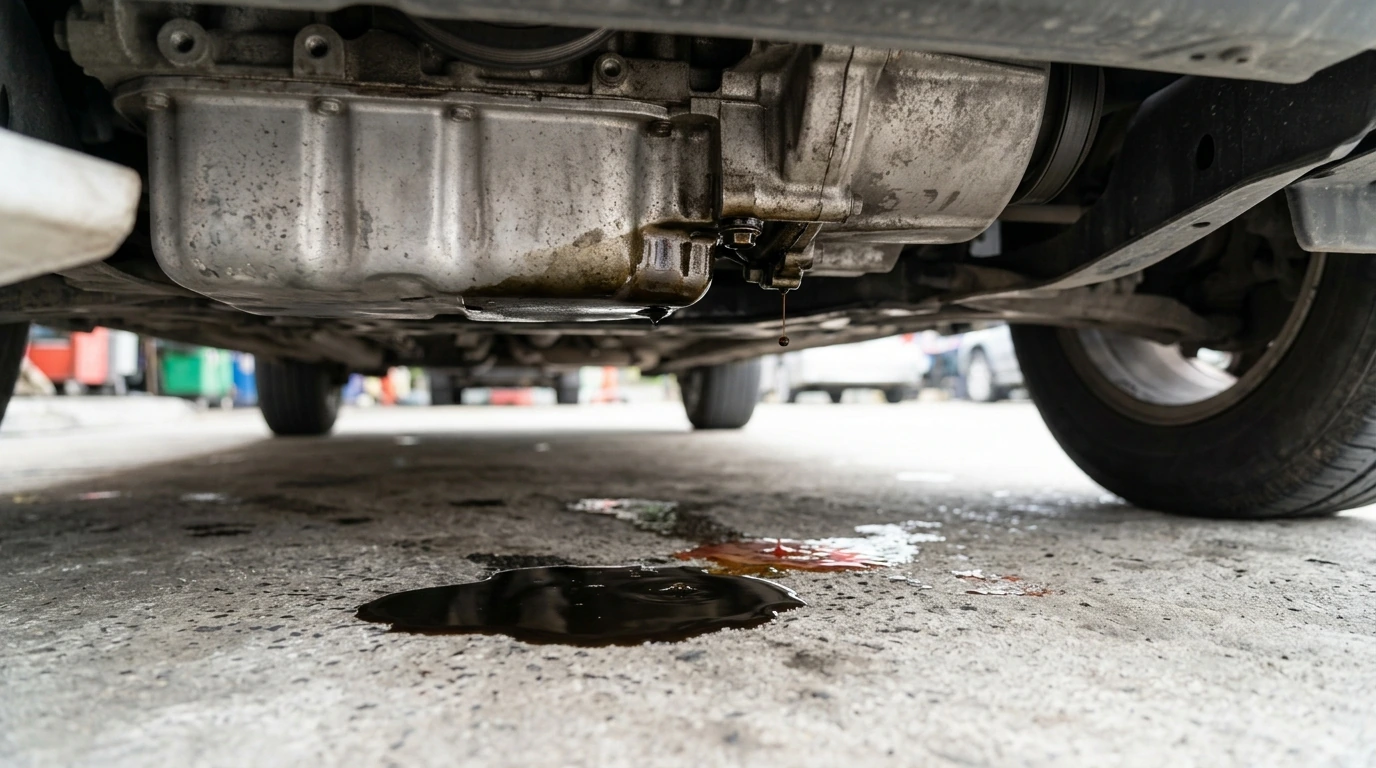
Car fluid leaks commonly appear clear, amber, brown, red, pink, green, orange, yellow, or blue. Color offers a useful first clue, but it cannot identify a fluid on its own: age, contamination, and product formulation can change its appearance. You can narrow down the source by considering the fluid’s texture, smell, and location under your vehicle.
A small puddle of clear, odorless water is often condensation from the air conditioner, especially after driving in warm weather. Clear fluid that feels slick or has a chemical smell deserves closer attention; fresh brake fluid can be nearly clear to pale yellow.
Engine oil is often amber when fresh and dark brown or black as it ages. It feels slippery and may collect beneath the engine. Brake fluid can also turn amber or brown over time, so do not rely on color alone. If the brake pedal feels soft or braking performance changes, stop driving and arrange a professional inspection.
Red or reddish-brown fluid can be automatic transmission fluid or power steering fluid. Some coolants are pink or red, too. Transmission and power steering fluids usually feel oily, while coolant is typically watery with a slightly slick feel. Check the location and your vehicle’s fluid specifications before deciding what you need.
Coolant is available in several colors, including green, orange, yellow, pink, and blue. Windshield washer fluid can also be blue or another bright color. Coolant leaks may appear near the radiator, hoses, or engine and can lead to overheating. Never open a radiator or coolant pressure cap while the engine is hot.
Place clean cardboard under the parked vehicle to help locate a fresh drip. Check fluid levels only as directed in your owner’s manual, and use the specified fluid if topping off is appropriate. For cleanup and inspection, our team recommends absorbent pads, protective gloves, and a flashlight; choose replacement fluids and parts compatible with your vehicle.
Do not drive with a suspected fuel or brake-fluid leak, severe fluid loss, or an overheating engine. Arrange a tow or professional service instead. For more detail, see our guide to identifying, confirming, and fixing car fluid leaks.
It depends on the fluid and severity, but you should not drive with a suspected fuel or brake-fluid leak, rapid fluid loss, or an overheating engine. Have the vehicle inspected before driving if you cannot identify the leak or the fluid level is dropping.





Leave a comment