Single parenting can feel like carrying every role at once—provider, planner, comforter, and coach. The most sustainable path combines practical systems (time, money, routines) with emotional supports (connection, boundaries, recovery time). The goal isn’t a flawless household; it’s a stable one that keeps you functioning today while protecting long-term well-being for both you and your child.
When time and energy are limited, clarity is calming. Begin by choosing three non-negotiables for the week—things that keep life from tipping into chaos. A solid baseline often includes (1) enough sleep to stay safe and patient, (2) reliable school/childcare logistics, and (3) nutrition basics that prevent everyone from crashing.
Next, replace perfection with minimum-viable standards: a “good enough” home reset (clear counters, dishes handled, one load of laundry moving), simple meals you can repeat, and consistent pickup/bedtime windows. Stability beats intensity.
Identify your top two stress multipliers—like a punishing commute, endless paperwork, conflict with a co-parent, or isolation—and choose one small reduction step for each. That might be consolidating appointments into one day, switching some communications to email, or asking a neighbor for an emergency pickup favor once a month.
Create a short “when things go wrong” plan you can use on your worst day: one backup childcare contact, an emergency meal option, and a 10-minute reset routine (breathe, drink water, clear one surface, prep bags). Boundaries are part of the plan too—say no to commitments that cut into sleep, disrupt routines, or inflame conflict.
Parenting rarely follows a perfect timetable, so build around anchors instead of rigid blocks. Start with fixed points: wake time, drop-off and pickup, dinner, and bedtime. Then add flexible “buffers” around them so late buses, sick days, and surprise homework don’t wreck the whole evening.
Use batching to keep life from becoming one long string of errands: laundry on one day, groceries in one order, and paperwork in one weekly session. A two-list method also helps: keep “Today (3 items)” short enough to finish even with interruptions, and maintain a “This Week” list for everything else.
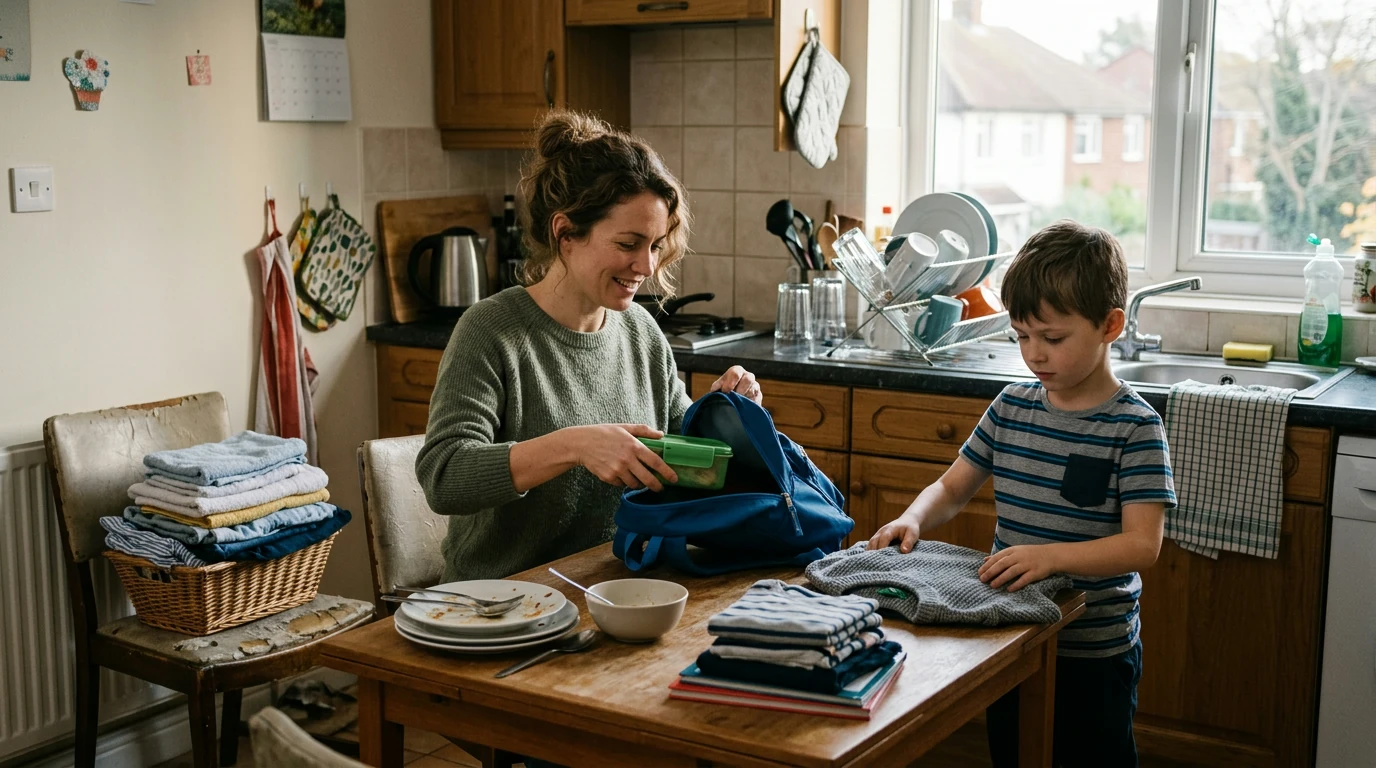
One of the highest-return habits is a 15-minute household reset: pick up the main area, quick wipe, and prep tomorrow’s bags and outfits. It reduces morning friction and decision fatigue. Finally, automate what you can—recurring bill pay, subscription essentials, and calendar reminders for school deadlines and appointments.
| Routine block | Time window | What to include | Make it easier with |
|---|---|---|---|
| Morning launch | 45–90 min | Dress, breakfast, bags, transit | Clothes set out; packed bags by door; breakfast rotation |
| After-school re-entry | 30–60 min | Snack, connection time, decompress | Phone away 10 minutes; simple snack bin |
| Homework / skill time | 20–45 min | Reading, homework, practice | Timer; one clear workspace; small rewards |
| Dinner + tidy | 45–75 min | Simple meal, dishes, quick reset | Meal themes; sheet-pan/slow-cooker options |
| Bedtime wind-down | 30–60 min | Hygiene, story/chat, lights out | Same order nightly; dim lights; calming playlist |
| Parent admin | 15–30 min | Calendar, forms, bills, next-day prep | Weekly checklist; one folder for school papers |
For evidence-based stress tools and coping skills, the American Psychological Association’s stress resources can be a useful starting point.
Consider a small mutual-aid circle with other parents: swap pickups, rotate playdates, and share hand-me-downs. Schools, libraries, and community centers often offer after-school programs and parenting workshops; for younger kids, the CDC’s Essentials for Parenting offers practical guidance on routines, behavior, and connection.
Professional support isn’t a “last resort.” Therapy, a legal consult, or financial coaching can prevent expensive crises later. If you’re facing mental health or substance use concerns and need immediate support, the SAMHSA National Helpline can help connect you to resources.
Step 4: Add a monthly check-in: calendar review, budget glance, upcoming school events, and one self-care appointment. If you want a step-by-step structure you can follow without guesswork, this resource can help: Strategies for Single Parenting Success – A Practical Guide on How to Handle Single Parenting Challenges, Time Management & Long-Term Well-Being.
To reduce friction in daily life, consider simplifying two high-effort areas: meals and clothing. A quick-heating option like the Retro Countertop Microwave Oven with Digital Display – 0.7 Cu. Ft., 700W can make weeknight dinners and after-school snacks more predictable. For fewer morning decisions, a streamlined closet plan such as the Capsule Wardrobe Builder Kit | How to Build a Capsule Wardrobe 3-in-1 Guides can cut down on daily choice overload.
Build your days around fixed anchors (school/daycare and bedtime), limit “today” to three priorities, and batch errands into one or two sessions per week. A short nightly reset plus one backup childcare plan prevents many last-minute emergencies.
Use minimum-viable standards, schedule daily micro-rests, and automate recurring tasks like bills and reminders. Ask for specific help early, and seek professional support if stress disrupts sleep, mood, or functioning for weeks.
Keep routines predictable and include small daily connection time (even 10 minutes). Validate feelings without overexplaining adult problems, aim for consistent rules across homes when possible, and involve school counselors if your child’s stress shows up in behavior or grades.







Leave a comment