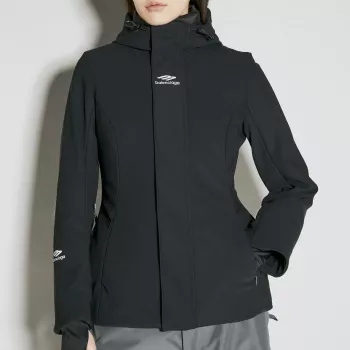
A quilted down jacket with a high collar and adjustable fit is built for cold-weather comfort without giving up a strong silhouette. This Balenciaga piece leans into insulated volume and controllable shape—useful for commuting, travel, and winter layering—while keeping the look polished enough for city wear. Below are practical notes on protection, adjustability, sizing, and what to check before buying, plus styling and care tips that help a down-filled layer look sharp season after season.
| Feature | Why it matters | What to check |
|---|---|---|
| High collar | Reduces heat loss at the neck and blocks wind | Collar height when zipped; comfort against skin; room for a hoodie |
| Adjustable fit | Changes silhouette and improves heat retention | Presence of toggles/drawcords; ease of tightening; does it bunch |
| Quilting layout | Affects mobility and insulation distribution | Even fill; no thin spots; stitching quality |
| Down insulation | High warmth-to-weight for cold weather | Down/feather ratio on label; loft; no persistent flat panels |
| Outer fabric | Durability and weather protection | Hand feel; abrasion resistance at cuffs; water resistance if stated |
| Closures | Heat retention and convenience | Zipper smoothness; storm flap; pocket closures |
Quilted down reads “intentional” because the paneling creates architecture: it’s not just puff—it’s proportion. The quilting pattern can make the jacket look cleaner and more tailored or more street-forward depending on how the panels stack across the chest and sleeves.
The easiest way to choose sizing is to decide how you’ll actually wear the jacket most days: over a T-shirt and light knit, or as a true winter shell over thicker layers. Down performs best when it can loft, so fit should feel comfortable rather than compressed.
Down insulation works by trapping air; the loftier it stays, the warmer it feels. Quilting helps keep the fill evenly distributed so warmth is consistent across the body—especially helpful on long, cold commutes.
For brand and material references, visit the Balenciaga Official Website. For broader context on down sourcing standards, see Textile Exchange’s Responsible Down Standard (RDS). When evaluating fiber content and labeling, the Federal Trade Commission’s textile labeling guidance is a helpful reference point.
This jacket’s strongest styling advantage is that it can carry the outfit on its own. Let the quilting and collar do the visual work, then keep the base simple and intentional.
A high collar reduces drafts and heat loss at the neck, so in moderate cold it can be enough on its own. In severe cold or high wind, adding a scarf can still improve insulation and comfort.
Prioritize room in the shoulders and chest so the down isn’t compressed and you can move your arms freely. Use hem or waist adjusters to control shape and seal in warmth without sizing down too far.
Dry it completely as directed on the care label (often low heat if permitted) and use dryer balls or clean tennis balls to break up clumps. Incomplete drying can leave odors and keep the fill flat.


Leave a comment