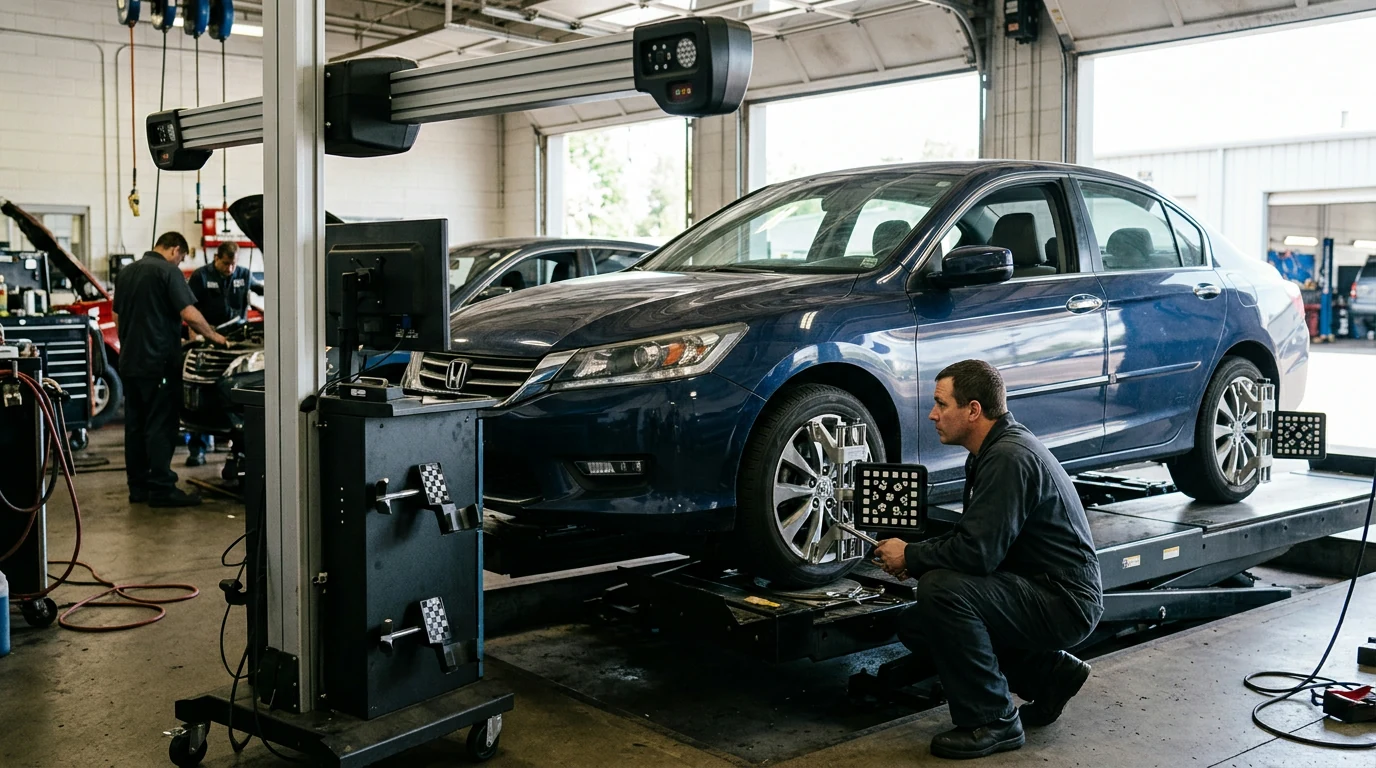
Accurate wheel alignment is one of the highest-leverage services you can offer: it protects tires, stabilizes handling, and helps you prevent comebacks tied to steering pull or uneven wear. Our team focuses on equipment that fits real shop conditions—daily volume, mixed vehicle traffic, and technicians who need quick, repeatable steps.
A modern 3D system like our Professional 3D Car Wheel Aligner with 8 Million Pixel Camera & Enhanced Alignment Tools is designed around that reality: fast setup, camera-based measurements you can trust, and reporting that makes customer conversations easier.
Alignment problems often aren’t hard because the angles are mysterious—they’re hard because time pressure, inconsistent steps, and “close enough” adjustments create variability. A professional 3D workflow is meant to tighten that up.
Resolution isn’t about bragging rights—it’s about how confidently and quickly the system recognizes targets and updates live readings while you’re turning tie rods or moving cams. In practice, clearer imaging can translate into smoother adjustments and fewer “let me recheck that” pauses.
When alignments slow down, it’s often because the process becomes non-linear: measure, adjust, re-measure, second-guess, and repeat. Enhanced alignment tools are most valuable when they guide your team back to a consistent sequence and reduce decision fatigue.
You can do perfect work and still lose the customer if you can’t show what changed. Clear reporting turns alignment from “trust us” into a straightforward before/after story.
If you’re deciding whether a professional 3D aligner is the right move, match it to your daily realities, not the occasional “problem child” vehicle.
| Capability | Why it matters in the bay | Outcome to expect |
|---|---|---|
| 3D camera-based measurement | Reads alignment angles through imaging/targets rather than manual gauges | More consistent measurements and fewer re-check loops |
| 8 million pixel camera | Higher resolution supports clearer target recognition and feedback | Faster confirmations during live adjustments |
| Enhanced alignment tools | Guided workflow helps standardize the process | More repeatable results across technicians |
| Before/after reporting | Documents service value and final specifications | Better customer communication and fewer disputes |
| Shop-friendly workflow | Designed for daily use and steady throughput | Shorter cycle time per vehicle |
For customer education on tire condition and maintenance basics, you can also point them to authoritative guidance like NHTSA’s tire safety resources and tire-wear explanations from Michelin.
If your priority is a modern 3D workflow with clearer camera feedback and a process your entire crew can run consistently, our team recommends the Professional 3D Car Wheel Aligner with 8 Million Pixel Camera & Enhanced Alignment Tools. It’s a strong match for shop owners who measure success in throughput, repeatability, and clean customer-facing reporting.
And because smooth operations aren’t only about equipment on the rack, some shops also upgrade their breakroom or customer area while they’re improving workflow. If you’re building out a comfortable space for long days, our Retro Countertop Microwave Oven with Digital Display – 0.7 Cu. Ft., 700W is an easy quality-of-life add for your team.
A 3D wheel aligner measures key alignment angles such as toe, camber, and caster, and may also calculate related angles like thrust angle depending on the vehicle. It uses camera-based target tracking to compare current readings to factory specifications and guide your adjustments.
Higher camera resolution supports clearer target recognition and steadier live feedback while you’re adjusting. That clarity can help you confirm readings faster and stay consistent across different lighting conditions and wheel finishes.
It’s smart to check alignment with new tires, after suspension or steering work, after pothole or curb impacts, or when uneven wear starts to appear. Catching small deviations early helps prevent premature tire wear and future handling complaints.






Leave a comment