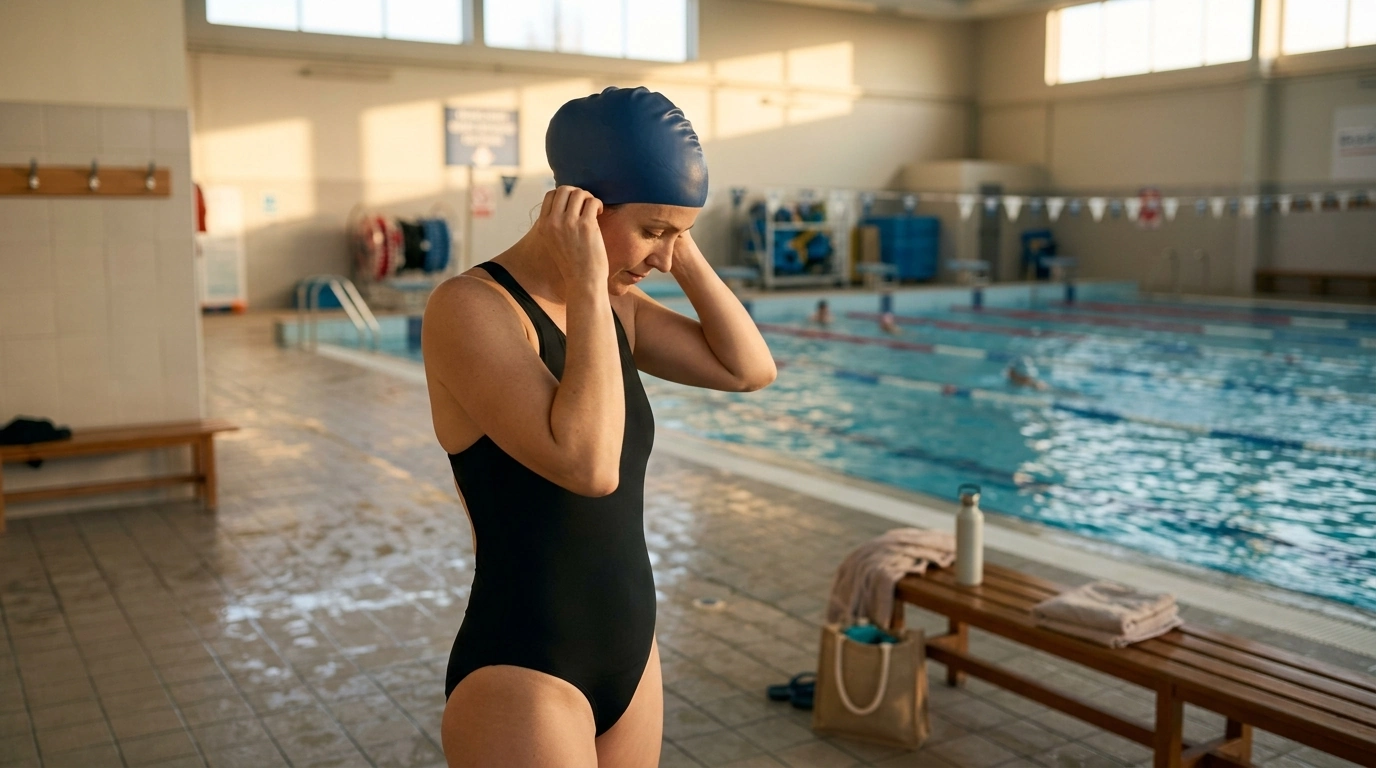
No swim cap is completely waterproof. A cap can cover your hair and help limit how much water reaches it, but water may still seep in around the edges, especially when you swim underwater or move vigorously. Caps also aren’t designed to create a watertight seal around your ears or keep your hair perfectly dry.
A swim cap keeps hair gathered and out of your face, reduces drag, and can help protect hair from some direct exposure to pool water. How much water gets under the cap depends on its material, fit, and how it’s worn. Silicone caps are stretchy and generally provide a close fit, while latex caps are thinner and may feel snug. Neither material guarantees a dry head.
Choose a cap that fits securely without pulling uncomfortably. Gather long hair flat against your head, then stretch the cap over it rather than twisting or bunching the hair into a knot. Check that the edges sit evenly around your hairline and nape. Avoid pulling the cap so tightly that it causes discomfort; a tight fit still won’t make it waterproof.
If keeping long hair covered or finding a comfortable fit is your priority, see our guide to silicone swim caps for long hair, ear coverage, and comfort.
For extra protection, wet your hair with clean water before swimming and rinse it afterward. You can also use a leave-in product made for swimming, if appropriate for your hair. These steps may help reduce chlorine exposure, but they don’t replace a cap or guarantee that pool water won’t reach your hair.
A swim cap should sit securely over your hair without slipping, pinching, or causing pain. Smooth the edges around your hairline and nape, and choose a larger or more flexible style if it feels uncomfortably tight.






Leave a comment