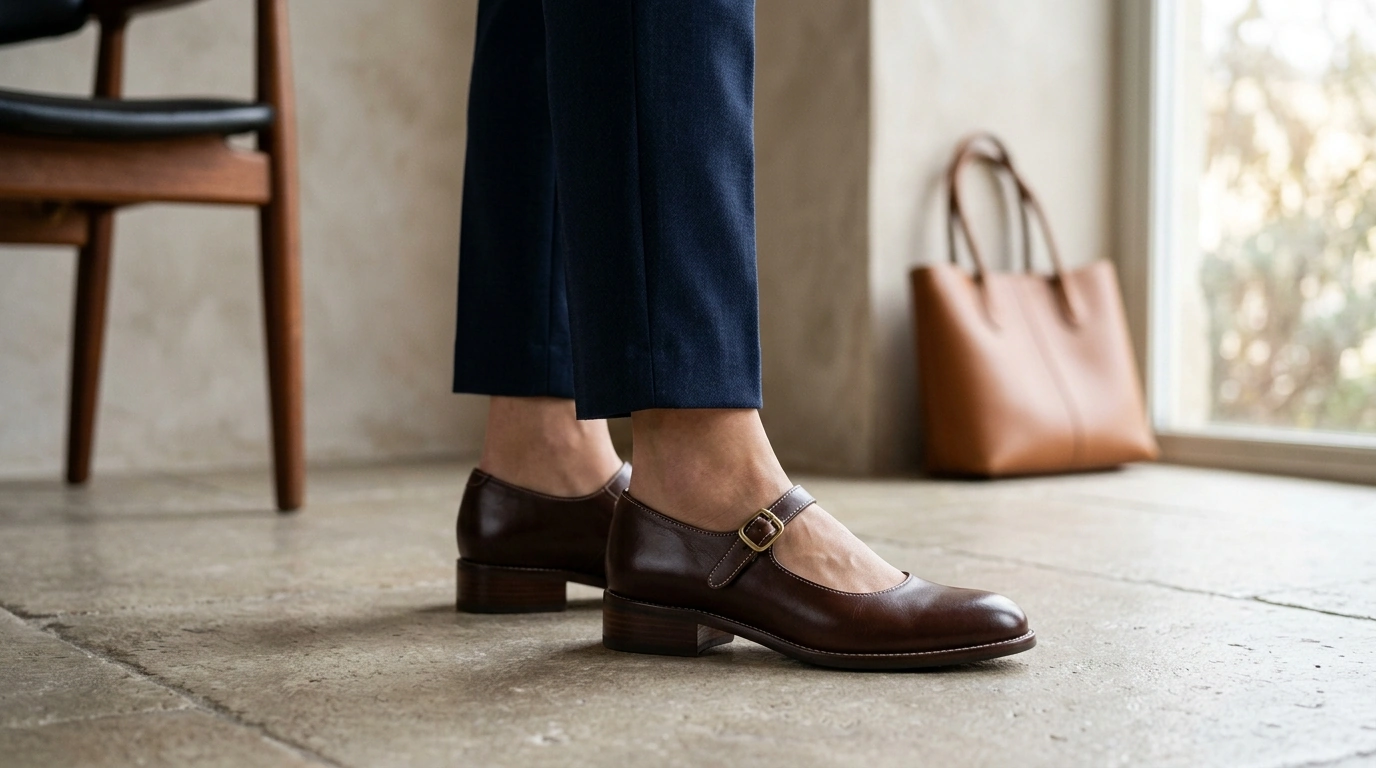
Mary Jane shoes with a low heel combine a timeless strap silhouette with day-long wearability. Genuine leather adds structure, breathability, and a polished look that works for office days, dinners, and weekend plans—without the strain of a high heel. This guide covers fit, comfort details, styling ideas, care, and what to look for before buying.
What Makes a Low-Heel Mary Jane Feel “Dressy” and Easy to Wear
A Mary Jane’s charm comes from how simple design choices can look elevated while staying practical.
- The strap refines the silhouette with a vintage-inspired line, and it also helps keep the foot secure while walking.
- A low heel adds subtle lift for posture and leg line without the wobble many people feel in taller heels.
- Genuine leather adapts over time, balancing a structured appearance with increasing flexibility.
- A clean, minimal upper transitions easily from workwear to evenings—often just by switching jewelry or a bag.
Material Matters: Why Genuine Leather Changes Comfort Over Time
Leather isn’t only about aesthetics. It can change how a shoe feels after a few wears, especially when the fit is close-but-correct.
- Gradual softening can reduce friction and pressure points compared with many rigid synthetics.
- Breathability may help manage heat and moisture during long workdays or events.
- Conditioning helps longevity by maintaining suppleness and lowering the risk of drying or cracking.
- Construction clues matter: look for smooth, even grain, consistent stitching, and a neat finish around edges and seams.
For general guidance on footwear and foot health, resources like the American Podiatric Medical Association (APMA) can be helpful when comparing supportive features.
Fit Checklist for Mary Janes (So the Strap Helps Instead of Hurting)
The strap should feel like a stabilizer—not a stress point. Use this checklist to dial in a comfortable fit.
- Toe room: you should be able to wiggle your toes; the forefoot shouldn’t pinch when standing.
- Heel hold: the back should stay stable. Persistent slipping can create hotspots and blisters even in low heels.
- Strap position: it should lie flat and feel secure without digging. Adjustable buckles make it easier to fine-tune.
- Arch and midfoot support: aim for a stable feel under the arch, especially if you stand for hours.
- Try-on timing: test later in the day when feet are slightly fuller for a more realistic fit.
Comfort and Stability Details to Look For
Small build details can make the difference between “looks great” and “wears great.”
- Wider, lower heel: helps distribute pressure and improves balance on hard flooring.
- Cushioned insole: reduces fatigue; removable insoles can make room for custom orthotics.
- Non-slip outsole texture: supports confident steps on smooth surfaces. (Workplaces often focus on slip prevention for a reason; see the CDC/NIOSH fall prevention resources for safety context.)
- Reinforced toe and heel: helps the shoe keep its shape and can reduce premature creasing.
- Rounded or almond toe: often strikes a balance between elegance and practical comfort.
Style Ideas: Outfits That Pair Naturally with Low-Heel Mary Janes
Low-heel Mary Janes can read classic, modern, or romantic depending on what you pair them with.
- Workwear: tailored trousers, a tucked blouse, and a structured bag for a clean, professional line.
- Dresses: midi dresses and shirt dresses pair naturally; the strap adds definition and keeps the look grounded.
- Skirts: A-line and pleated skirts create a balanced silhouette with a low heel.
- Denim: straight-leg or ankle-length jeans with a crisp knit or blazer for polished casual.
- Seasonal layering: tights and a wool coat in cooler months; airy fabrics and lighter colors in spring and summer.
If building outfits feels like a puzzle, a wardrobe framework can help reduce guesswork. The Capsule Wardrobe Builder Kit is an option for planning versatile combinations around a few dependable staples.
Quick Comparison: Low-Heel Mary Janes vs. Similar Classics
Use the table below to compare everyday dress-shoe classics by comfort needs, convenience, and the overall vibe.
How Classic Dress Shoes Compare
| Style |
Best for |
Comfort notes |
Look and vibe |
| Low-heel Mary Jane |
Office, events, days with walking |
Strap improves hold; low heel reduces strain |
Classic, refined, slightly retro |
| Ballet flat |
Quick errands, minimalist outfits |
May lack support; heel slip can happen |
Simple, delicate, casual-to-smart |
| Loafer |
Business casual, travel |
Often supportive; easy on/off |
Structured, preppy, modern classic |
| Low-heel pump |
Formal settings, polished work looks |
Can be less secure without a strap |
Sleek, dressy, streamlined |
Care Guide for Genuine Leather Shoes
A few minutes of routine care can keep leather looking polished and help it age more gracefully.
When to Choose These Shoes
Featured Pick
Elegant Women’s Genuine Leather Mary Jane Shoes with Low Heel is a polished everyday option designed to pair well with office outfits and dressier looks while staying comfortable for longer wear. Check the product page for current sizing guidance, availability, and color options before ordering.
FAQ
Are genuine leather Mary Janes comfortable for all-day wear?
They can be, especially when the leather has time to soften and the shoe includes cushioning, a stable low heel, and a secure strap. All-day comfort still depends on accurate sizing and having enough arch support for your needs.
How should a Mary Jane strap fit?
The strap should feel snug but not tight, lying flat without pinching the top of the foot. After adjusting, walk a few minutes to confirm it doesn’t rub at the buckle area or create pressure as your foot flexes.
How do you care for genuine leather shoes to keep them looking new?
Wipe them clean after wear, condition periodically to prevent drying, and protect them from excess moisture. Let damp shoes air-dry away from direct heat, and store them with light stuffing or shoe trees while rotating pairs to reduce wear.
Recommended for you





Leave a comment