Wooden Twin Daybed with Drawers for a Kids Room or Living Room
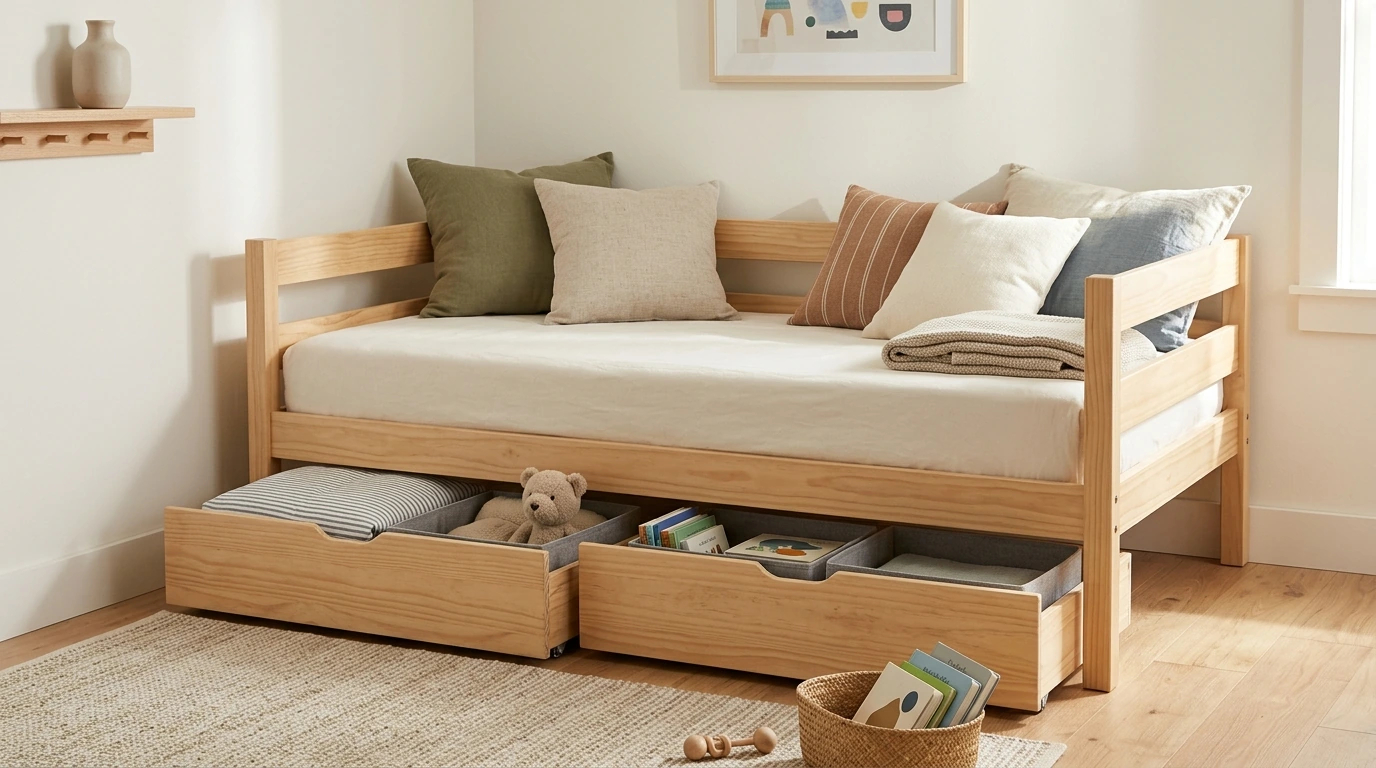
A wooden twin daybed can pull double duty: a comfortable place to lounge during the day and a practical sleep space at night. Add built-in drawers, and it becomes even more useful—helping corral bedding, toys, books, or extra blankets without adding another bulky storage piece. Whether you’re outfitting a kids room, a den, or a small apartment, the right twin daybed setup can make the room feel calmer and more functional.
What a twin daybed setup does well
- Combines seating and sleeping in one footprint, which is especially helpful in smaller bedrooms, multipurpose rooms, or guest spaces.
- A wood frame tends to blend easily with kids décor, casual living rooms, and minimalist interiors, making it a flexible choice as styles change.
- Twin size works for kids, teens, and occasional adult use while still leaving floor space for play, a desk, or a reading corner.
- Daybed rails (side and back) help it feel more sofa-like when styled with pillows, so it looks intentional rather than like a spare bed.
Storage drawers: how to make them genuinely useful
Drawers are only “extra storage” if they’re easy to access and you know what’s going into them. A quick plan before setup prevents the common problem of drawers that jam, overflow, or become a random catch-all.
- Measure what needs to be stored first: spare sheets, comforters, throw blankets, seasonal clothing, toys, or books.
- Leave clearance so drawers open fully—especially important in narrow bedrooms or when the daybed sits close to a wall.
- Use soft bins or organizers inside drawers to separate categories (linens vs. toys) and keep items from shifting.
- If the daybed sits on carpet, confirm drawers can still roll smoothly. Low-pile rugs or a hard surface under the drawer path often help.
- Label drawer zones for kids (for example: “Pajamas,” “Stuffed animals,” “Extra pillowcases”) to reduce clutter and make cleanup faster.
Comfort and mattress considerations
Most twin daybeds pair with a standard twin mattress, but the “right” mattress depends on how the daybed will be used: occasional guest bed, daily lounging, or a primary kids bed.
- Confirm any mattress height guidance so the rails still work as back/arm support and the proportions look balanced.
- For lounging, medium to medium-firm mattresses often feel more supportive when sitting upright with pillows.
- Add a washable mattress protector for kids rooms and guest use; it’s a simple upgrade that helps with spills and everyday wear.
- If used as a sofa daily, consider a supportive topper and a set of large back pillows to create a comfortable seat depth.
- Check weight limits and intended usage (kids sleepovers vs. frequent adult guest use) before choosing mattress density and thickness.
Placement ideas for kids rooms and living rooms
Kids room
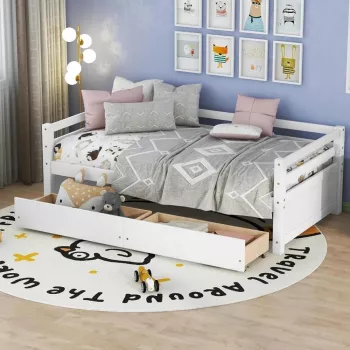
Place the daybed along a wall to open floor space for play. Keep sleepover bedding in one drawer and toys or books in the other to make day-to-day routines easier.
Shared room
Living room or den
Home office
Small apartment
At-a-glance checklist before ordering
Quick reference: what to measure and confirm
| Item to check |
Why it matters |
What to do |
| Floor space |
Prevents a cramped layout |
Measure wall-to-wall and mark the footprint with painter’s tape |
| Drawer clearance |
Ensures drawers open fully |
Allow extra space in front/side where drawers slide out |
| Mattress height |
Affects rail comfort and look |
Verify recommended mattress height so it doesn’t sit too tall |
| Doorway/stair access |
Avoids delivery surprises |
Measure tightest doorway and turns on the route to the room |
| Daily use pattern |
Determines comfort needs |
Frequent lounging may need better pillows/topper than guest-only use |
Assembly, care, and keeping the frame looking good
Safety notes for a kids-friendly setup
- Follow the included instructions closely and use all required fasteners for stability.
- Avoid placing the daybed under windows with dangling blind cords; keep cords secured and out of reach.
- If using as a sofa, add pillows for comfort instead of allowing climbing on rails.
- Keep heavier items (extra blankets) in drawers rather than stacking on top to reduce clutter and tripping hazards.
- If the daybed is near shelves or tall furniture, anchor tall pieces to reduce tip-over risk. See the CPSC guidance on furniture tip-over prevention and additional family home safety tips from the AAP at HealthyChildren.org.
Product options to complete the room
FAQ
Does a twin daybed need a special mattress?
Typically no—most use a standard twin mattress. The main thing to watch is mattress height, since a mattress that sits too tall can make the rails less comfortable and change the look; adding a mattress protector is a practical upgrade for kids or guest use.
How much space is needed to use the drawers comfortably?
Plan for the full pull-out distance of the drawers and leave enough clearance so they open without scraping furniture or walls. If the daybed is on carpet, confirm the drawers can still roll smoothly and consider a low-pile surface in the drawer path.
Can a daybed work as everyday seating in a living room?
Yes, especially when it’s styled like a sofa with supportive back pillows and a throw. For daily use, a medium to medium-firm mattress feel and pillow arrangement that creates comfortable seat depth make a noticeable difference.
Recommended for you





Leave a comment