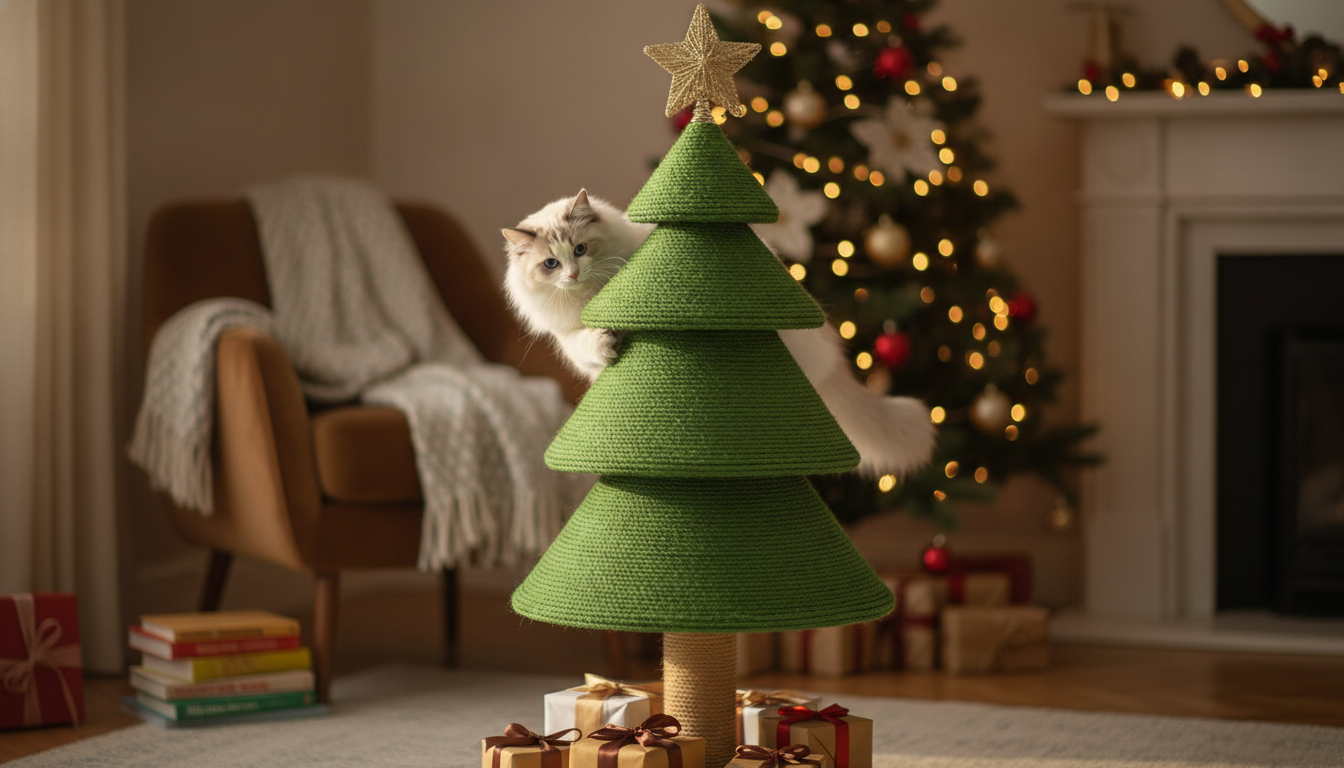
A holiday-themed cat tower can double as year-round enrichment when it offers clear climbing routes, scratchable surfaces, and stable perches. A Christmas tree-inspired design adds seasonal charm while still supporting everyday cat behaviors—scratching to stretch and mark, perching to “supervise,” and quick bursts of climbing play that help indoor cats stay engaged even when the house is busy.
What Makes This Tower Different
This style of cat furniture stands out because it’s meant to look like décor without losing function. Instead of feeling like a bulky cat tree that dominates a room, the tree silhouette can sit neatly in a corner and still give cats a vertical “yes space.”
- Christmas tree silhouette: Blends seasonal styling with practical cat furniture so it can feel intentional in living rooms and entryways.
- Built-in scratch board: Creates a clear alternative to rugs and sofa corners, helping you redirect scratching to an approved surface.
- Vertical, confidence-building layout: Encourages climbing, hopping, and perching—great for cats who like height.
- Compact footprint: A space-saving option compared with wide multi-column cat trees, especially helpful during the holidays when floor space shrinks.
- Photo-friendly “holiday spot”: Lets you capture cute seasonal moments without needing ornaments or tinsel near pets.
Comfort, Play, and Scratching: How Cats Use It
Most cats rotate through three core activities: resting, observing, and scratching. A climbing tower that combines perches and a scratch board can support all three in one tidy zone.
- Climbing and perching: Elevated resting points help cats feel secure and give them a comfortable place to watch the household.
- Scratching: Helps maintain claw condition, stretch the back and shoulders, and leave scent markers that make a space feel familiar.
- Structured play: A defined climbing area can reduce boredom for indoor cats—especially during holiday routines when attention is split.
- Training-friendly: A dedicated scratch board is easier to reinforce with praise and a little catnip than trying to “correct” scratching after it happens.
- Low-clutter enrichment: Placing the tower near a window can add passive entertainment (birdwatching) without adding more toys around the room.
Daily Enrichment Ideas Using the Tower
| Goal |
Simple setup |
Time needed |
| Redirect scratching |
Rub a pinch of catnip on the scratch board and reward use |
2–3 minutes |
| Encourage climbing |
Place a treat on an upper level, then move it higher over days |
3–5 minutes |
| Add calm downtime |
Set a soft blanket on a perch if the surface allows |
1 minute |
| Support multi-cat sharing |
Create a turn-taking routine with treats to reduce guarding |
5 minutes |
For more on why cats scratch (and how to work with that instinct), International Cat Care offers a helpful overview: Scratching behaviour in cats.
Where It Fits Best at Home
Placement is what turns a “nice-looking tower” into something cats truly use. Think about jump paths, household traffic, and what your cat already prefers.
- Choose a level floor: Leave clearance around the tower so cats can hop on and off without bumping sharp furniture edges.
- Avoid fragile décor zones: Keep it away from breakable ornaments and dangling cords. Holiday pet safety guidance from the American Veterinary Medical Association (AVMA) is a solid reference.
- Centerpiece without chaos: If you place it in a main room, pick a spot where foot traffic won’t nudge the structure.
- Help shy cats succeed: Start in a quiet room so it becomes “safe territory,” then relocate later if needed.
- Scratch-training tip: If the main goal is to stop furniture scratching, place it near the current problem area first, then gradually shift it once the habit sticks.
Safety and Stability Checks Before Letting Cats Climb
A decorative look should never come at the cost of stability. Take a minute for a quick check before the first climb, and repeat occasionally.
- Confirm a flat base: The tower should sit flush with no wobble. If one corner lifts, reposition to a more level spot.
- Inspect the scratch board: Look for staples, sharp edges, or loose pieces and address them before your cat uses it.
- Skip risky add-ons: Avoid tinsel, ribbon, or string items that can be swallowed. The ASPCA’s holiday safety tips are a useful reminder list.
- Kittens and seniors: Supervise early sessions and make sure the cat can choose shorter jump routes if needed.
- Re-check after “zoomies”: Tighten or inspect contact points periodically, especially after high-energy play.
Care and Upkeep for a Fresh-Looking “Holiday Tree”
Keeping the tower clean helps it stay inviting and helps your home feel fresher during shedding season.
Product Details and Quick Comparison
At-a-Glance
More In-Stock Picks (Gift-Friendly)
FAQ
Is a scratch board enough, or is a scratching post still needed?
Many cats do great with one scratch option if it matches their preference (vertical vs. horizontal). Watch how your cat naturally scratches; if furniture scratching continues, add a second scratcher in the opposite style and place it near the problem spot.
How can a cat be introduced to a new climbing tower safely?
Place the tower in a calm area, sprinkle a little catnip or use treats, and reward any investigation or pawing. Avoid placing your cat on it or forcing climbs; supervise early sessions, especially for kittens and senior cats.
Are holiday-themed cat towers safe to keep up year-round?
Yes—if the materials remain intact and the tower stays stable, it can be a year-round enrichment spot. Avoid seasonal add-ons like tinsel or ribbons, and do routine checks for wobble, loose parts, or overly worn scratch surfaces.
Recommended for you





Leave a comment