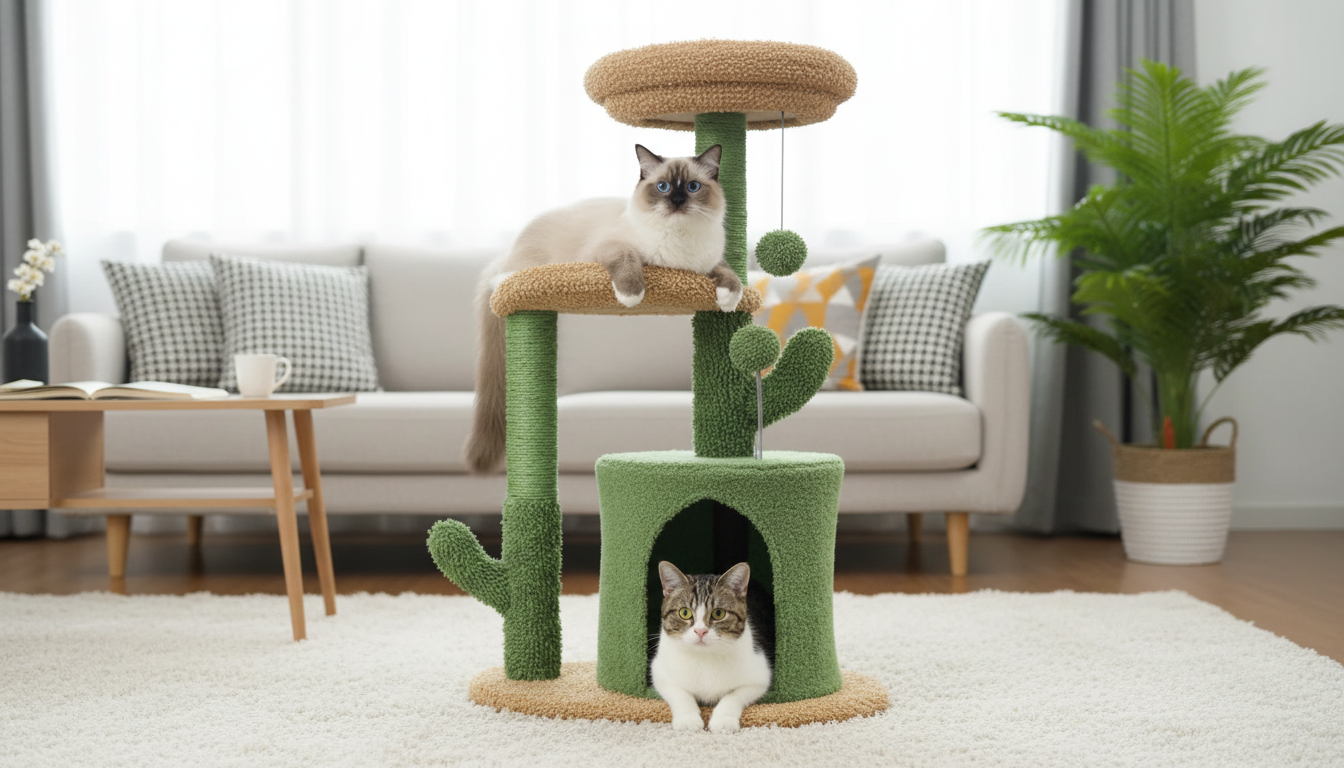
A playful cactus-shaped scratching tower can give cats a dedicated place to claw, stretch, and burn off energy while helping protect furniture. The Festive Cat Scratching Post Cactus Tree Tower is designed to feel like a natural part of the room—something your cat can return to every day—so scratching becomes a habit in the right place instead of a surprise on the couch corner. For more guidance, see Globlazer 76-Inch Cat Tree Tower | Multi-Level Cat Furniture ….
Below you’ll find what it’s best for, how to place it for quick adoption, and simple routines that keep the tower appealing long after the “new” factor fades. For more on why scratching is normal and important, see guidance from the ASPCA and the Humane Society of the United States. For further reading, see Indoor Cat Furniture Aazon.co : DWVO 68″ Tall Cactus Cat Tree.
The Festive Cat Scratching Post Cactus Tree Tower is a vertical scratching tower with a novelty cactus look made for daily scratching and light play. It’s especially helpful when a cat has picked “favorite” forbidden spots—furniture edges, carpet seams, or door frames—and needs a clear, rewarding alternative.
Scratching isn’t misbehavior; it’s maintenance, communication, and stress relief rolled into one. A cactus-style tower gives that instinct a clear outlet, which can make the whole home feel calmer—especially during busy weeks or schedule changes.
| Need at home | How a scratching tower helps | Placement tip |
|---|---|---|
| Furniture scratching | Provides a preferred surface with texture and height | Set it beside the most-scratched furniture edge |
| High-energy bursts | Gives a spot to grab, kick, and reset between zoomies | Place where play usually starts (living room, hallway entry) |
| Boredom during the day | Adds an interactive station cats can revisit | Near a window or a common cat path |
| Multi-cat tension | Creates an additional resource to share or take turns | Avoid tight corners; give approach space on multiple sides |
Not all scratchers feel “right” to a cat. Small design details often decide whether the post becomes a daily habit or a background decoration.
Placement is the shortcut to success. The “best” scratching tower won’t help if it’s hidden in a low-traffic corner your cat rarely visits.
The goal is simple: make the tower the easiest, most rewarding place to scratch. Keep sessions short, upbeat, and consistent.
Some cats use a new post the same day, while others take one to two weeks. Placement near the current scratch zone, rewarding curiosity, and temporarily covering the old target usually speeds things up.
Place the tower directly beside the scratched corner, aligned with how your cat approaches that spot. During the transition, use a protective cover on the couch corner so the tower becomes the easiest option.
Some cats strongly prefer horizontal textures, so add a flat scratcher or mat right next to the tower. Once your cat is using the approved surface, encourage brief vertical stretches with treats or play near the tower.




Leave a comment