Essential Pet Gear for Everyday Walks: A Printable Checklist for Stress-Free Outings
A smooth daily walk starts before the leash clips on. The right gear helps prevent common problems like pulling, overheating, forgotten waste bags, or a dead phone when plans change. Use the checklist below to build a reliable grab-and-go setup for quick potty breaks, longer neighborhood walks, and errands with your dog.
What “everyday walk” gear needs to solve
- Control: Safe restraint that fits well and reduces strain on the neck and shoulders
- Comfort: Prevents rubbing, paw irritation, and dehydration on routine routes
- Safety: Visibility for cars/cyclists, ID in case of slips, and basics for minor mishaps
- Clean-up: Waste bags and a simple carry method so hands stay free
- Consistency: A repeatable routine that makes leaving the house faster
The core walk kit (the non-negotiables)
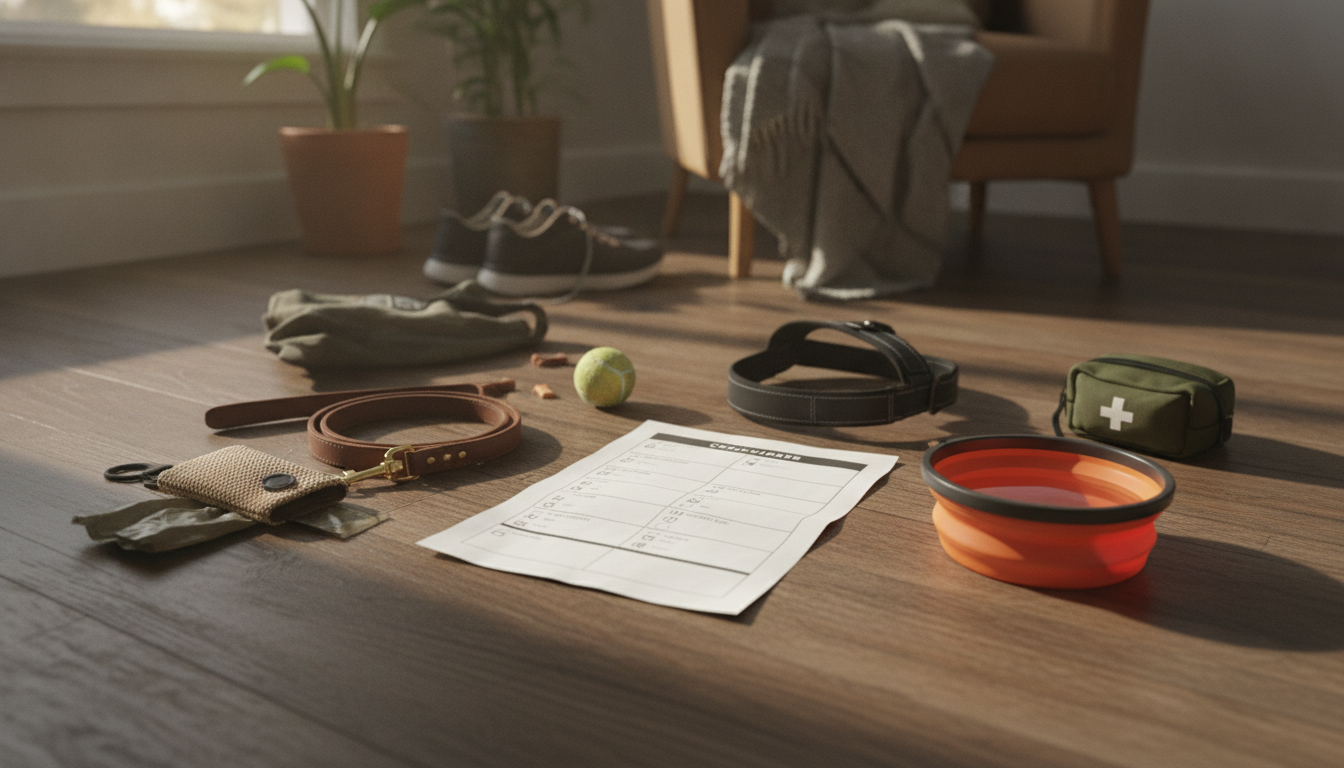
- Leash: Choose a sturdy standard leash length that matches your environment; prioritize a comfortable handle and a reliable clip.
- Collar or harness: Pick a secure, well-fitted option; consider a front-clip harness for pulling or a padded harness for sensitive dogs.
- ID tags: Ensure your phone number and address are current; keep microchip registration details updated in your records.
- Waste bags: Keep backups in multiple places (dispenser, pocket, car) to avoid getting caught without them.
- Treat pouch or pocket-friendly treats: Helps maintain attention and calm behavior at thresholds, crossings, and greetings.
If you prefer a ready-to-print version you can keep by the door, see the Printable Essential Pet Gear checklist for everyday walks.
Fit and comfort checks that prevent most walk problems
- Collar fit: Use the two-finger rule; too tight causes irritation, too loose increases escape risk.
- Harness fit: Watch for rubbing at the armpits and chest; adjust so it stays stable without restricting shoulder movement.
- Clip and hardware inspection: Check for rust, cracks, bent gates, and frayed webbing; replace if wear is visible.
- Skin and coat quick scan: Look for redness under straps, hotspots, and burrs after grassy routes.
- Paw check: Confirm nails aren’t catching; check pads for salt, grit, or small cuts.
Safety add-ons that make a big difference
- Reflective elements: Reflective leash/collar/harness or a reflective vest for low-light walks.
- Light source: A clip-on LED for your dog and a small flashlight/headlamp for you (two light sources helps you stay visible and see hazards).
- Emergency contact info: A simple card in your pouch with your vet number, allergies, and medications.
- Carabiner or hands-free belt (optional): Helps carry a filled waste bag and keeps hands available.
- Muzzle (situational): For dogs in training, high-stress environments, or vet-recommended situations; ensure proper sizing and gradual conditioning.
Weather-ready gear for routine routes
- Heat: Pack a collapsible water bowl and extra water for longer routes; choose shaded paths when possible. Review hot-weather safety guidance from the American Veterinary Medical Association (AVMA).
- Cold: Consider an insulated coat for short-haired or senior dogs and paw protection for ice/salt. The ASPCA cold weather tips are a helpful baseline for seasonal routines.
- Rain: A lightweight rain jacket for dogs that dislike getting wet, plus a microfiber towel by the entryway or in the car.
- Seasonal hazards: Tick prevention tools (confirm with your veterinarian) and a consistent post-walk inspection. For prevention basics, see the CDC guidance on preventing tick bites.
- Surface protection: Paw balm or booties if sidewalks get hot, salted, or rough—practice indoors first so your dog isn’t learning on a busy corner.
Training and behavior support gear (simple, not complicated)
To make routines even easier, some households simplify their “walk-ready” clothing the same way they simplify the gear by the door. If you like systems, a streamlined approach like the Capsule Wardrobe Builder Kit | How to Build a Capsule Wardrobe 3-in-1 Guides can reduce last-minute outfit decisions when you’re trying to get outside quickly.
Printable checklist: build a grab-and-go system
Everyday Walk Gear Checklist
| Category |
Item |
When to pack it |
Notes |
| Control |
Leash |
Always |
Check clip and stitching weekly |
| Control |
Harness or collar |
Always |
Confirm fit; avoid rubbing at armpits |
| Safety |
ID tags (updated) |
Always |
Keep microchip info current |
| Clean-up |
Waste bags + dispenser |
Always |
Carry a backup roll in the bag |
| Rewards |
Treats + pouch |
Most walks |
Use higher value for distractions |
| Visibility |
Reflective/LED light |
Low light |
Dog light + handler light is ideal |
| Hydration |
Water + collapsible bowl |
Warm days/long walks |
Offer small drinks, not huge gulps |
| Weather |
Coat/rain jacket/towel |
As needed |
Store near the leash hook |
| Paws |
Booties or paw balm |
Hot/salted/rough paths |
Practice indoors first |
| Basics |
Phone/keys |
Always |
Enable location sharing for long routes |
Quick troubleshooting: what to adjust when walks feel stressful
FAQ
Is a collar or harness better for daily walks?
Many dogs do best with a well-fitted harness because it can reduce pressure on the neck and feel more comfortable on routine walks. A collar is still useful for holding ID tags, and the best choice depends on pulling habits, body shape, and any vet guidance.
What should always be in a dog walking bag?
Always carry a leash, a secure collar or harness, waste bags, and ID. Add treats for attention and calm behavior, and include a light for low visibility; pack water and a bowl when it’s warm or you’ll be out longer.
How often should walking gear be replaced?
Inspect gear weekly or monthly and replace anything with fraying webbing, cracked or rusted hardware, bent clips, or straps that no longer hold adjustment. Replace immediately if integrity is compromised or if persistent odors and wear suggest the material is breaking down.
Recommended for you





Leave a comment