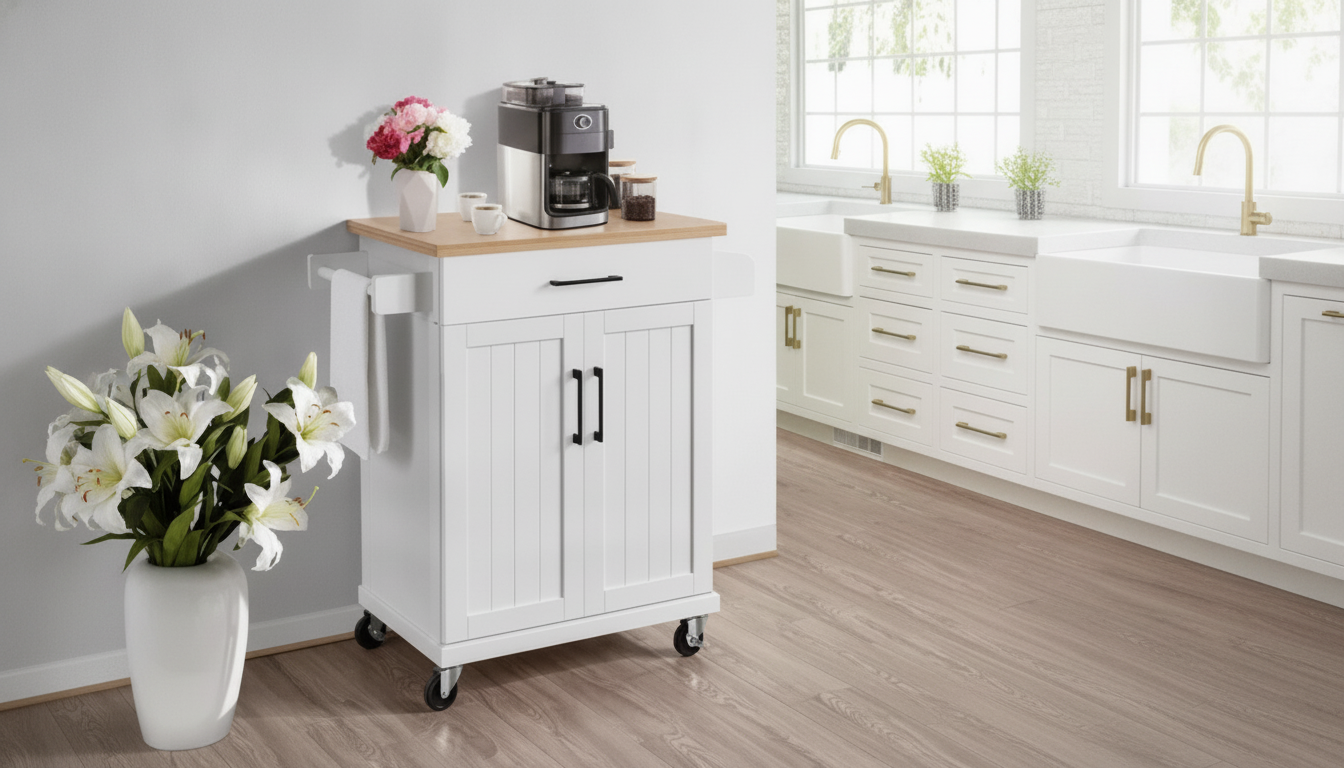
A well-designed kitchen cart can add workspace, organize tools, and create a flexible serving spot without a remodel. Drawer storage keeps everyday essentials close, while enclosed or open shelves handle bulkier items—ideal for apartments, multipurpose kitchens, and anyone who needs extra capacity that can move exactly where it’s needed.
A rolling cart does more than “add storage.” It changes how a kitchen functions by putting tools, ingredients, and a work surface in the same place—right where you’re cooking.
The most useful carts feel “obvious” to use: the things you reach for constantly are fastest to grab, and the bulky items don’t get in the way.
| Feature | Best for | What to check before buying |
|---|---|---|
| Drawer storage | Utensils, wraps, small tools | Smooth slide action, interior height, and drawer pull comfort |
| Open shelves | Bowls, small appliances, baskets | Shelf height clearance and weight capacity |
| Locking casters | Stability while prepping or serving | At least two locking wheels; easy-to-reach locks |
| Handle or push bar | Safer movement with heavy loads | Sturdy attachment and comfortable grip |
| Top surface | Prep and serving | Heat resistance expectations; room for a cutting board |
A cart can be compact and still feel “too big” if it blocks traffic. Before choosing one, consider both the parking spot and the route it needs to roll.
For additional planning guidance around clearances and work areas, the NKBA Kitchen Planning Guidelines are a helpful reference point for thinking through how people move and work in a kitchen.
Because a cart is mobile, it needs a few habits (and features) that fixed cabinetry doesn’t.
Tip-over prevention matters for many home furnishings—especially in busy households. The CPSC furniture tip-over information offers practical safety context that also applies to top-heavy setups and careless loading.
The fastest way to get value from a cart is to give it a “job.” When everything on it supports that job, it stays tidy and useful.
If you’re building an appliance station, consider pairing a cart with a compact unit like the Retro Countertop Microwave Oven with Digital Display – 0.7 Cu. Ft., 700W (and always confirm ventilation space plus the cart’s weight ratings).
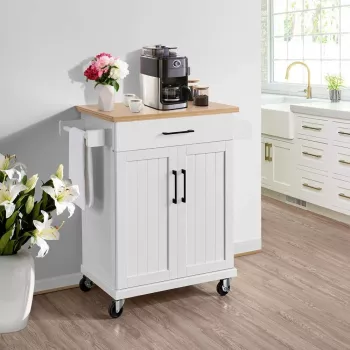
If the goal is a simple, versatile upgrade—extra workspace, a true drawer for the small stuff, and storage that can move—take a look at the Kitchen Cart with Drawer & Storage. It’s built to function as a prep cart, serving cart, or overflow storage for kitchens where cabinet space disappears fast.
| Item | Details |
|---|---|
| Product | Kitchen Cart with Drawer & Storage |
| Price | 131.17 USD |
| Availability | In stock |
| Product page | https://elpisa.com/kitchen-cart-with-drawer-storage/ |
Weight capacity varies by design and materials. Check the listed limits for the top and each shelf separately, and keep heavier items on lower shelves for better stability.
Yes—locking casters help prevent the cart from shifting while chopping, mixing, or serving. Having at least two locking wheels is a practical baseline for day-to-day safety and steadiness.
It can, as long as the top fits the microwave footprint and allows ventilation clearance. Confirm the cart’s top weight rating and route the cord so it won’t snag when the cart moves.





Leave a comment