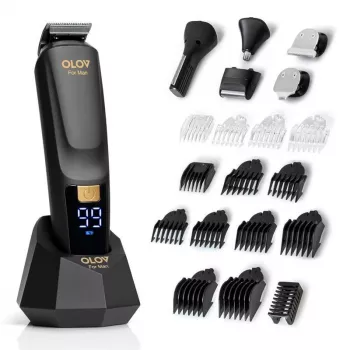
An all-in-one grooming kit can simplify beard shaping, neckline cleanups, and quick body touch-ups without juggling multiple tools. Multi-attachment sets are built for fast maintenance sessions: keep the length consistent, clean up the edges, and handle small detail areas without switching between separate devices. Below is a practical guide to what to expect from a multi-piece trimmer kit, how to use it for predictable results, and how to keep it comfortable and easy to maintain—using a 21-piece set as the reference point.
What an all-in-one grooming kit covers
- One handle, multiple roles: beard trimming, edging, and detail work using swappable heads and guard combs.
- Ideal for in-between maintenance: cheek lines, neckline, mustache edges, and light body grooming when you want to look “reset” without a full barber visit.
- Less clutter: a single kit often replaces a beard trimmer, a detailer, and a basic body trimmer for many routines.
- Designed for quick touch-ups: frequent 3–8 minute sessions to keep lines tidy often deliver better day-to-day results than rare, lengthy trims.
What’s typically included in a 21-in-1 kit
- Main trimmer body/handle with an adjustable power switch and attachment interface.
- Interchangeable cutting heads (commonly a standard trimmer head and a precision/detail head; some kits add specialty options).
- Multiple guide combs/guards to control length for even trimming across the beard.
- Cleaning accessories such as a small brush; some kits include oil for blade care.
- Charging cable/stand and storage components to keep attachments organized.
Common attachments and what they’re best for
Common attachments and what they’re best for
| Attachment / accessory |
Best use |
Tip for cleaner results |
| Standard trimmer head + guard combs |
Overall beard length, uniform reduction |
Start longer than needed, then step down to the final length |
| Precision/detail head |
Mustache lines, corners of the mouth, small touch-ups |
Use light pressure and short strokes to avoid overcutting |
| Edging/outline work (no guard) |
Neckline and cheek line definition |
Mark the line first, then clean below it; don’t chase perfect symmetry too aggressively |
| Cleaning brush (and oil if included) |
Removing hair from blades and reducing friction |
Brush out after every use; oil lightly only if the manufacturer recommends it |
Setting up for a consistent trim
- Trim on dry, detangled hair: comb through first to lift hairs that lay flat so the guard cuts evenly.
- Pick a reference length: choose one guard and test a small area on the sideburn/cheek area before trimming the full beard.
- Upgrade your lighting: overhead light plus a front-facing light reduces “missed patches,” especially along the jawline.
- Use the right direction: move against the grain for stronger cutting action; if skin is irritation-prone, finish with a gentle with-the-grain pass for refinement.
For skin-safety basics that also apply to trimming and edging, the American Academy of Dermatology’s guidance on reducing bumps and irritation is a helpful reference: Tips for shaving and preventing razor bumps (AAD).
Simple routines: stubble, short beard, and fuller beard maintenance
Stubble (fast refresh)
- Use a short guard and make one slow, even pass across the beard area.
- Switch to no-guard edging for the neckline and a light cheek cleanup.
- Stop early if irritation starts—stubble looks best when it’s even, not overly sharp.
Short beard (balanced)
- Trim bulk with a guard first, prioritizing uniform length over sharp lines.
- Use the detail head to clean the mustache line and corners of the mouth.
- For a natural blend, step down one guard size near the upper cheeks/sideburns rather than trimming everything at one length.
Fuller beard (keep shape)
- Remove strays first (especially under the jaw), then reduce length gradually.
- Focus on overall symmetry and a tidy neckline; taking too much off too quickly is the most common “regret trim.”
- Comb down, then trim; comb again and re-check. Fuller beards shift as you comb and move.
Neckline rule of thumb
Comfort and skin-safety basics
Clean hands before and after grooming and while handling attachments—especially if multiple people share a grooming station. CDC hand hygiene guidance is a straightforward reminder: CDC Clean Hands.
Cleaning and maintenance for better performance
Who this type of kit fits best
The 21-in-1 Beard Trimmer & All-in-One Grooming Kit is built around a single handle with swap-in components aimed at covering trimming, edging, and detailing needs. It fits routines that involve more than one step—bulk reduction first, then outlining, then small cleanups—without reaching for multiple devices.
More in-stock picks to round out your routine
FAQ
How often should a beard trimmer be cleaned?
Brush out hair after every use, and do a deeper clean regularly (about weekly if you trim often). If the manufacturer recommends oil, use a small amount to help the blade run smoothly.
Should trimming be done on wet or dry facial hair?
Dry trimming is usually more consistent because wet hair can lie flatter and then look longer after it dries. If trimming wet, go conservatively and recheck once the beard is fully dry.
How can a clean neckline be maintained without irritation?
Use light pressure and short strokes, and avoid edging too low or too frequently. Keeping tools clean and setting a slightly higher neckline can reduce bumps for sensitive skin.
Recommended for you





Leave a comment