
Emotional intelligence is built in small moments: noticing a feeling before it spills out, choosing words that match the outcome, and repairing quickly when things go sideways. The challenge is consistency—most people don’t need more theory; you need a clear way to practice. AI can support that practice by helping you name emotions, reframe assumptions, rehearse difficult conversations, and track patterns over time. Our team put together the workflow below so you can turn emotional awareness into better decisions, calmer communication, and stronger relationships—without turning your life into a full-time self-improvement project.
Emotional intelligence (EI) isn’t “staying calm all the time.” It’s getting better at noticing what’s happening internally and choosing responses that match your values and goals.
AI can’t do the emotional work for you, but it can make the work more doable when you’re busy or activated.
If you want reputable, research-based background on regulation and stress, we recommend the American Psychological Association’s overview of emotional regulation and the National Institute of Mental Health’s coping-with-stress guide.
The goal is a repeatable system you can run even on a messy day.
| Situation | What to ask AI | What to do next |
|---|---|---|
| Overthinking a message | Rewrite this message in a calm, clear tone. Keep it under 80 words. Offer 2 versions: direct and warm. | Send one version within 10 minutes; stop revising after the third pass. |
| Feeling disrespected | Help identify what value or boundary was crossed. Ask me 5 questions to clarify what I need. | Choose one boundary sentence and one request; schedule a time to address it. |
| Conflict after a mistake | Draft a repair message: acknowledge impact, take responsibility, state the fix, and prevent recurrence. No over-apologizing. | Send repair + fix plan; set a reminder to follow up with results. |
| Hard feedback to give | Create a feedback script using Situation–Behavior–Impact–Request. Keep it neutral and specific. | Deliver in a private setting; ask for their view and agree on next steps. |
| Emotional spike (anger/anxiety) | Guide me through a 90-second regulation plan (breath, body scan, label emotion, choose response). | Do the regulation plan, then revisit the decision with one clear objective. |
| Recurring trigger | Based on these 5 recent situations, find the pattern: trigger → story → feeling → behavior → outcome. Suggest 2 alternative stories. | Pick one alternative story to practice; write one “if-then” plan for next time. |
If you want an evidence-based, skills-focused perspective on building emotional skills, the Yale Center for Emotional Intelligence is also a strong resource.
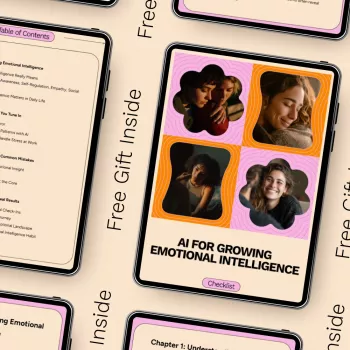
If you want a ready-made system you can reuse (instead of reinventing your process every time you’re stressed), our team recommends starting with AI for Growing Emotional Intelligence: A Comprehensive Guide to Developing Emotional Intelligence with AI Tools and Prompts. It’s built for repeatability: clear frameworks for daily check-ins, conflict debriefs, and conversation rehearsals—so you spend less time figuring out what to ask and more time practicing what you’ll actually do.
And if decision fatigue is one of your hidden stress multipliers, simplifying routines can support emotional regulation. Many customers pair EI practice with a streamlined “less to think about” system like our Capsule Wardrobe Builder Kit | How to Build a Capsule Wardrobe 3-in-1 Guides—not as a substitute for communication skills, but as a way to reduce daily friction so you have more bandwidth for the conversations that matter.
Include the situation, what was said/done as facts, your interpretation, your emotion intensity (0–10), your goal (repair, boundary, clarity), and any constraints like tone or length. Ask for 2–3 response options and one concrete next step you can take right away.
Yes—AI can guide you through short, structured steps like grounding, labeling the emotion, and choosing a response plan in 60–120 seconds. Use it to regain clarity quickly, then return to the decision once your body is calmer.
Use a 5–10 minute check-in to name the emotion, identify the trigger and need, and choose one micro-action for the day. Add one conversation rehearsal during the week and one weekend pattern review to keep improving without overthinking it.






Leave a comment