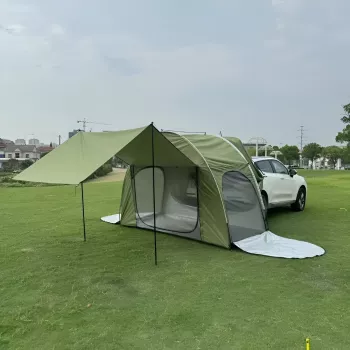
For weekend trailheads, festival overnights, and campground loops, an SUV tent turns the space behind a Toyota, Ford, or Honda into a sheltered sleeping zone and gear room. Our team put together this practical guide to help you decide whether an SUV-attached setup is the right upgrade from a ground tent or sleeping inside the cabin—especially if you want easier bedtime routines, better organization, and a little more weather protection at the hatch.
An SUV tent is less about “more square footage” and more about creating a functional transition space between your vehicle and your sleeping area. That transition is what makes camp feel calmer and less chaotic.
Fit is usually more about the shape and clearance of your rear opening than the badge on your grille. Before you commit to an SUV tent, do a quick driveway check with your hatch fully open and your typical camping accessories installed.
| Check | Why it matters | What to do |
|---|---|---|
| Hatch opens fully | Attachment needs full liftgate range | Test hatch clearance with the tent location in mind |
| Rear perimeter is unobstructed | Straps/sleeve need smooth wrap points | Remove or reposition racks/boxes if possible |
| Flat ground behind the vehicle | Better sealing and fewer drafts | Level with blocks if permitted at the campground |
| Room for doors you’ll use | Avoid stepping over gear at night | Decide which side is “entry” and keep it clear |
The easiest SUV-tent arrivals follow a repeatable order. The goal is to get weather coverage and structure up fast, then fine-tune the connection at the hatch.
| Task | Best time | Who does it |
|---|---|---|
| Level vehicle + parking position | Before unloading | Driver |
| Lay out footprint/tent body | Immediately after parking | Partner/Helper |
| Stake corners + insert poles | Before attaching to hatch | Either |
| Attach sleeve/straps to rear | After structure stands | Two people if windy |
| Rainfly + guy lines | Before bedtime | Either |
Once you stop treating the whole tent as one big room, SUV camping gets easier. The hatch connection is your mudroom; the tent is for sleep.
For broader trip planning and weather safety guidance, you can review the NOAA National Weather Service safety resources and the National Park Service camping basics. For campsite ethics, the Leave No Trace 7 Principles are a solid refresher before every season.
Fit depends on your rear hatch shape, open-hatch clearance, and having an unobstructed rear perimeter for straps or a sleeve. Measure the hatch opening, check the hatch height when fully open, and account for racks, spare tires, or bumpers that could interfere.
Typically you can detach the hatch connection and leave the tent staked and guyed out, then reconnect when you return. The key is to treat staking as non-negotiable so the tent remains stable without the vehicle supporting that connection point.
Keep airflow going by cracking vents early, and keep wet clothes and muddy gear out of the sleeping area. Condensation is common in cool, humid conditions, so avoid sealing everything shut unless wind-driven rain forces it.





Leave a comment