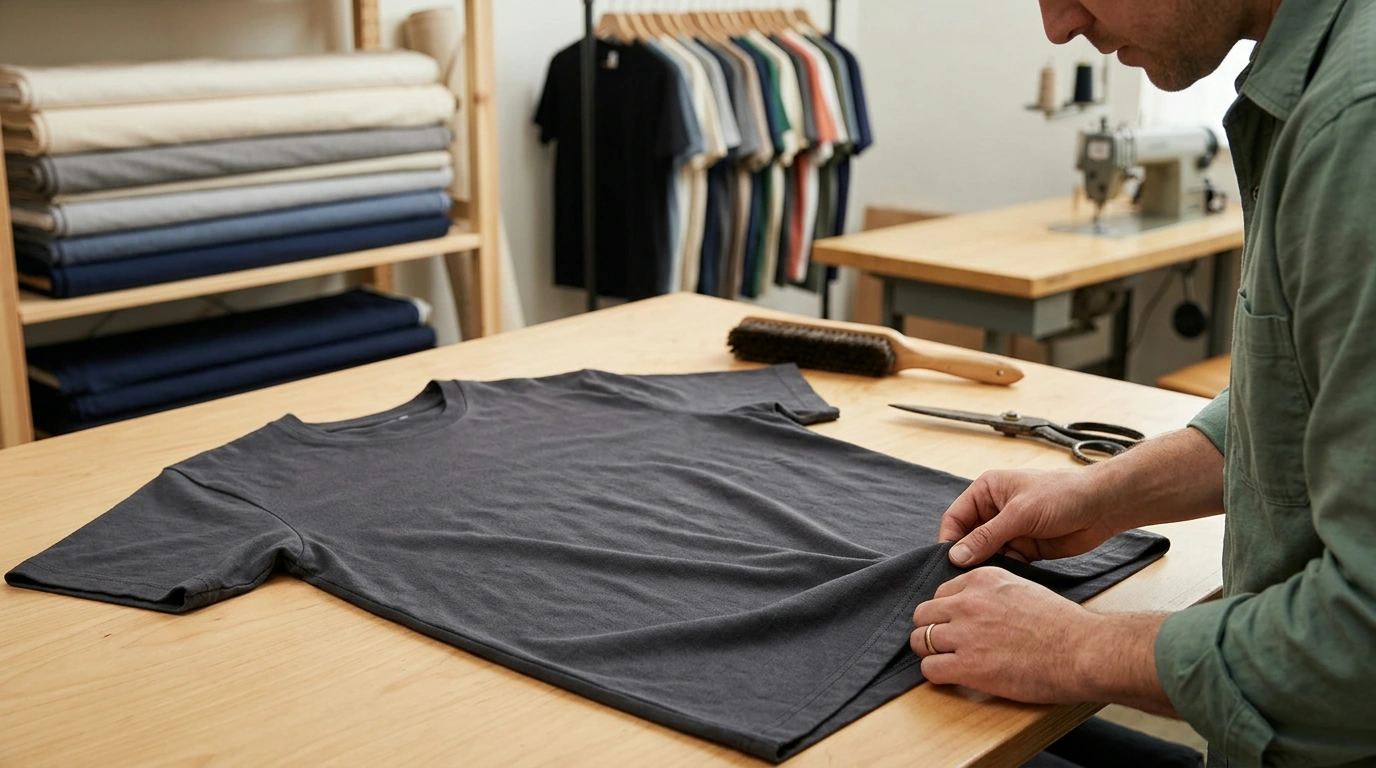
They can be. A 100% cotton T-shirt can feel soft, breathe well, and hold up to regular wear, but the fiber content alone does not determine quality. The fabric’s weight and finish, the way the shirt is sewn, and how you care for it all matter. Our team recommends looking at the whole garment rather than choosing by the “100% cotton” label alone.
For a broader look at cotton shirts, visit our guide to whether cotton T-shirts are good quality.
Start with the fabric. A smooth, even surface and a substantial feel can indicate a shirt made for regular use, while very thin fabric may feel lighter and less substantial. Neither is automatically better: choose a fabric weight that suits the climate and how you plan to wear the shirt.
Next, look at construction. Even stitching, neatly finished seams, and a collar that lies flat are useful signs of careful workmanship. A shirt should feel comfortable against your skin and move easily without seams twisting or pulling during ordinary wear.
Cotton is breathable and comfortable for everyday outfits, and many people like its natural feel. It is also easy to wear on its own or as a layer. However, cotton can wrinkle, shrink, or lose some shape if it is exposed to high heat or rough laundering. It may also take longer to dry than some synthetic fabrics.
Some cotton T-shirts are made with combed or ring-spun yarns, which can create a smoother, softer feel. These terms describe yarn or fabric processes, not a guarantee that every shirt will be durable. Construction and fabric quality still matter.
Follow the care instructions on the garment. Washing in cool water and using a low-heat setting or air-drying can help limit shrinkage and preserve the shirt’s shape. Turn it inside out before washing to reduce friction on the outer surface. Avoid over-drying, especially if maintaining the original fit is important to you.
Wash it according to its care instructions, preferably in cool water, and use low heat or air-dry it to help reduce shrinkage and wear.





Leave a comment