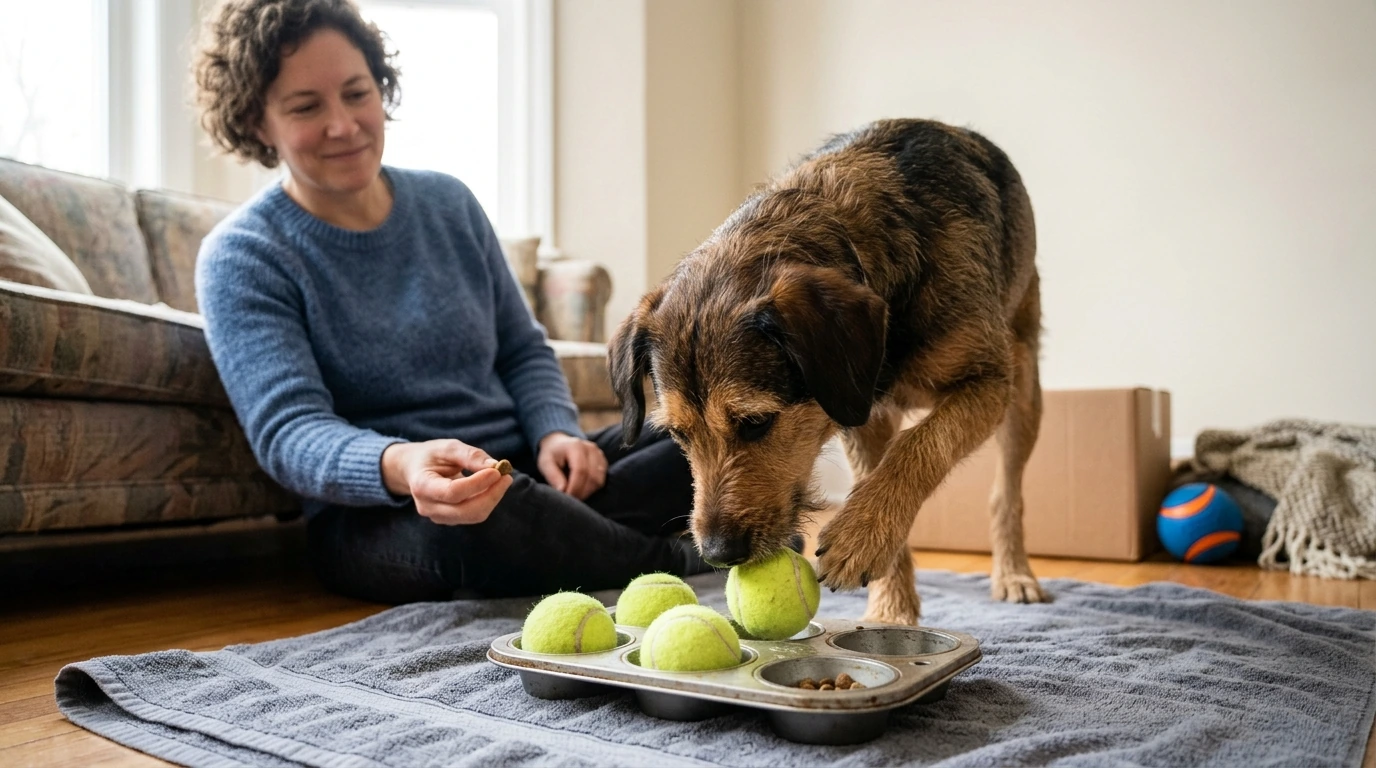
A dog’s brain is built to solve problems: track scents, make choices, and work for rewards. When that need goes unmet, many dogs create their own “jobs”—chewing table legs, digging, counter-surfing, or barking to start a game. Purposeful brain games channel that drive into something productive and predictable.
For enrichment safety ideas and everyday training guidance, the American Kennel Club and the ASPCA offer helpful, dog-first resources.
The best brain game looks “almost too easy” at first. Dogs build persistence when success comes quickly and calmly—then you raise the bar in tiny steps.
| Dog type or situation | Best game style | Simple setup | When to level up |
|---|---|---|---|
| New to puzzles | Scatter/search games | Toss kibble in grass or on a snuffle mat | Finds food fast without scanning the whole area |
| High-energy adult | Multi-step puzzles | Layer a treat in a toy, then hide the toy | Can wait calmly before release and completes steps cleanly |
| Shy or anxious | Confidence games | Treat trails leading to an easy win | Shows relaxed body language and seeks the next challenge |
| Mouthy/chewer | Durable enrichment | Frozen stuffed feeder toy | Stops trying to shred and spends time licking/working |
| Senior dog | Low-impact scent work | Boxes/cups with one treat hidden | Searches longer without fatigue or frustration |
Most smart play doesn’t require fancy gear—just clear rules, supervision, and rewards your dog cares about.
Consistency beats complexity. A simple rotation turns meals into enrichment and prevents the “new toy, who dis?” fade-out after a few days.
If you want a ready-to-use set of structured activities that progress from easy wins to more challenging puzzles, check out the Brain Games Dogs Love, Smart Play That Works eBook.
For a deeper look at reward-based training principles that pair well with brain games, see the AVSAB position statements.
Adjust for age and fitness, repeat favorite days, and increase difficulty gradually. If you prep frozen enrichment (like stuffing a feeder toy), a small kitchen helper like the Retro Countertop Microwave Oven with Digital Display – 0.7 Cu. Ft., 700W can make quick work of warming water or softening dog-safe foods for mixing (always cool completely before serving).
For dogs that need a calmer outlet (or households that want a grab-and-go plan), the Brain Games Dogs Love, Smart Play That Works eBook organizes brain games by difficulty so you can build skills without guesswork. It’s especially handy for rainy days, high-energy breeds, and multi-dog homes where structure matters.
Most dogs do best with 3–10 minute sessions, 1–3 times per day. End on a win, increase difficulty slowly, and prioritize calm, focused behavior over duration.
Choose durable designs, match toy size to your dog, and supervise closely. Remove damaged toys right away, and switch to safer options like frozen food in a sturdy feeder toy if your dog tries to shred or swallow pieces.
Brain games can reduce boredom-driven barking and destruction by meeting mental needs, especially when paired with exercise, predictable routines, and reward-based training. If anxiety or severe behavior issues are involved, consult a qualified professional.





Leave a comment